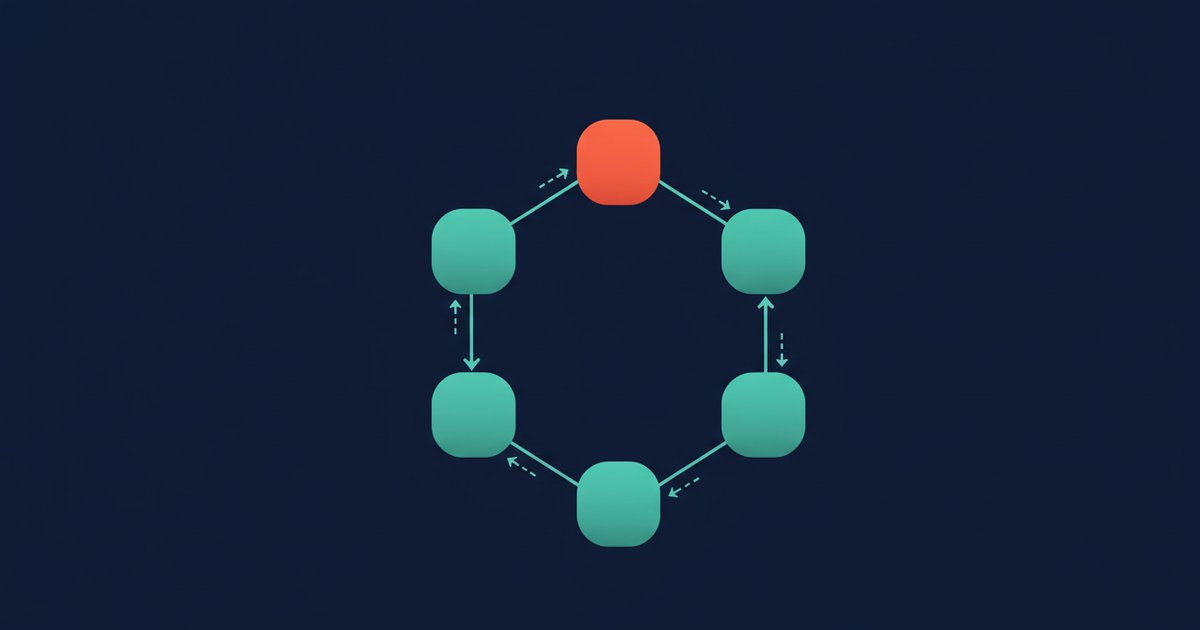
The full system, end to end
You’ve reached the capstone. Over the last nine lessons you’ve built every part of a working marketing automation program, one piece at a time. This lesson does two things: it walks the complete GlowKit system across all six lifecycle stages so you can see how the parts click together, and it sets aside space for a real founder to show you their own version of the same build.
If you’ve only skimmed the series, this is the map that ties it together. If you’ve done the “your turn” tasks along the way, this is your assembly guide — the moment the isolated workflows become one machine that carries a stranger from first click to loyal, repeat customer. Everything below links back to the lesson where you learned to build it, so you can jump straight to any piece you want to revisit.
This is the final lesson of the full marketing automation course. Remember where GlowKit started: a two-person D2C skincare brand whose founder chased abandoned carts by hand, thanked big customers when she remembered, and won back lapsed buyers only on a spare afternoon. Below is what the same brand looks like once the whole system is running — nothing touched by a human in the moment, every stage covered around the clock.
We’ll follow GlowKit’s lifecycle, the same map we’ve used since Lesson 1:
Visitor → Subscriber → First-time buyer → Repeat buyer → VIP / Loyal → Lapsed / At-risk
Here’s the whole system on one line per stage — the trigger that starts it and the flow that runs. Read it top to bottom and you’re reading GlowKit’s entire program:
| Lifecycle stage | Trigger | The flow that runs |
|---|---|---|
| Visitor → Subscriber | Signup form submitted | Capture email/SMS, start welcome series |
| Subscriber → First-time buyer | Joined list; cart abandoned | Welcome series + abandoned-cart flow (email & SMS) |
| First-time buyer → Repeat buyer | First order placed | Post-purchase + replenishment nudge |
| Repeat buyer → VIP / Loyal | Spend / order threshold crossed | VIP early access + loyalty reward |
| Any stage → Lapsed / At-risk | 60–90 days of silence | Win-back sequence + list cleaning |
Now walk each row in turn, and notice how every one of them traces back to a specific lesson in this course.
Stage 1 — Visitor → Subscriber
A stranger lands on GlowKit from a paid-social ad. A signup form offers 10% off the first order in exchange for an email — and, optionally, a phone number. That capture is the whole point of the top of the funnel: turn anonymous traffic into a contact the system can act on. This is exactly what marketing automation is at its most basic — a trigger (form submitted), a condition (email valid, not already subscribed), and an action (add to list, start the welcome flow). Before any of this fires, GlowKit knew which moments were worth automating because the founder first did the work of mapping the customer journey — charting where visitors drop off and what each stage needs.
Stage 2 — Subscriber → First-time buyer
The new subscriber immediately enters the welcome series — the first workflow GlowKit ever built, and the one you learned to assemble in the hands-on setup lesson. Email one delivers the discount code and the brand story. Email two, two days later, shows the hero serum with three real reviews. Email three nudges with the offer expiring. Running underneath is the biggest revenue play of all: if the subscriber adds a product to the cart and doesn’t check out, the abandoned-cart flow fires an hour later, then again at 24 hours with free shipping. Cart recovery matters because roughly 70% of online shopping carts are abandoned before checkout — the single biggest leak in the funnel. These revenue flows, and the swipe copy behind them, are the heart of email marketing automation.
For the subscribers who handed over a phone number, GlowKit layers a lighter SMS touch on top: a single, well-timed text an hour after cart abandonment, and a two-way “reply YES for a reminder” option. SMS is short, immediate, and consent-gated — the discipline you picked up in SMS & conversational automation. Email and SMS aren’t rival channels here; they’re one coordinated nudge with two mouths.
Stage 3 — First-time buyer → Repeat buyer
The order lands. Now the post-purchase flow takes over: an order confirmation, a “how to use your serum” tip a few days in, and — timed to when the bottle should be running low — a replenishment nudge inviting the buyer to reorder or switch to the subscription. This is where a one-time buyer quietly becomes a repeat one. None of it is guesswork about who to send to, because GlowKit routes buyers using the logic from customer segmentation & lifecycle — a first-time buyer of a single serum gets a different message than someone who bought the full routine.
The timing here is the clever part. GlowKit knows its vitamin-C serum lasts roughly eight weeks, so the replenishment nudge fires at week six — early enough to catch the buyer before they run out and drift to a competitor, late enough that the reminder feels helpful rather than pushy. That single date-based condition, learned once and applied to every buyer, is the difference between hoping people come back and engineering it.
Stage 4 — Repeat buyer → VIP / Loyal
When a contact crosses a spend or order-count threshold — say, three orders or a set lifetime value — a condition flips them into the VIP segment and triggers early access to launches, a small loyalty reward, and a warmer tone. This is automation working with your best customers rather than at strangers, and it’s where the math turns decisive: classic Bain & Company research popularized in Harvard Business Review found that a 5% lift in customer retention can raise profits by 25% to 95%. For a brand that lives on repeat purchase, this stage isn’t a nicety — it’s the business.
Stage 5 — Any stage → Lapsed / At-risk
Every contact is watched for silence. Go 60–90 days without opening, clicking, or buying and you trip the win-back flow: a “we miss you” message, then a real incentive, then a final “is this goodbye?” that also cleans the list by sunsetting the truly disengaged. Recovering an at-risk customer is far cheaper than acquiring a new one, which is why this back-half stage — the one GlowKit’s founder used to ignore — carries some of the highest returns in the whole system.
The scoreboard, and the engine on top
All six stages report into one place. GlowKit tracks revenue by flow, so the founder knows the cart series earned more than the newsletter, and can defend the spend — the measurement discipline from measuring marketing automation ROI. The numbers justify the effort: automated flows are the most efficient thing a small brand runs. Across roughly 150,000 brands, Omnisend found that in 2025 automated emails drove about 30% of all email revenue from just 2% of sends — a handful of well-built workflows doing the heavy lifting.
And once the plumbing is solid, GlowKit lets AI ride on top — drafting subject-line variants, predicting who’s about to churn, choosing send times — the leverage you explored in scaling with AI. AI doesn’t replace the system; it makes each of the six stages a little smarter.
One quiet detail makes all of this manageable: GlowKit runs nearly the entire system inside a single all-in-one platform — data store, automation engine, email and SMS channels, and the analytics scoreboard in one login. That wasn’t an accident; it was the deliberate result of choosing an automation stack that covered most layers out of the box, so a two-person brand never had to stitch five tools together.
That’s the whole machine. Six stages, one coordinated relay of triggers, conditions, and actions, measured and improved on a loop — running every hour of every day so the founder doesn’t have to.
Your turn
Lay your own six stages side by side and mark which flows are live, which are half-built, and which are still blank. You don’t need all of them at once — GlowKit didn’t. Ship the welcome series and the cart recovery first, because that’s where the fastest revenue hides, then work outward to post-purchase, VIP, and win-back. The map above is your build order.
Founder Spotlight
Editor’s note: a real D2C founder interview will be published in this space — a working operator walking through their own version of the GlowKit build, in their own words, with the numbers they’re willing to share. We’re holding this section until that conversation is confirmed rather than filling it with invented quotes. Check back, or subscribe to the course updates, and you’ll find a real story here.
Lessons for your own build
Step back from GlowKit and here’s what the whole series comes down to — the handful of principles that survive whatever tools or industry you’re in.
- Map before you automate. Every workflow above exists because a stage in the journey needed it, not because a tool had a template. Start with the customer’s path, then automate the moments that matter.
- Start with the leaks, not the whole system. The welcome series and cart recovery earned their keep first. A brand can teach itself automation with two flows and grow from there — you don’t build all six stages on day one.
- The back half of the journey is where the money hides. Acquisition gets the attention, but post-purchase, VIP, and win-back are where retention — and profit — actually compound. Most brands leave that half wide open.
- Fewer, more relevant messages beat more messages. Conditions and segments exist so the right person gets the right note. That’s the difference between automation and spam.
- Measure by revenue per flow, then improve on a loop. If you can’t see what each workflow earns, you’re automating blind. The scoreboard tells you what to fix next.
- Let AI ride on top of solid plumbing, not instead of it. AI amplifies a well-built system and amplifies a broken one just as fast. Get the flows right first.
Your turn — the capstone
Here’s the final task, and it’s the real one. Take your own business through the same six stages GlowKit did. For each stage, write the one flow that belongs there in when / if / then form, note which tool will run it, and mark whether it’s live today. When you’re done you’ll be holding a one-page blueprint of your entire automation program — the same thing GlowKit built, in your own brand’s language. That page is the deliverable this whole course was pointing at. Build the first two flows this week; let the rest follow.
That’s the course. You started with a founder doing everything by hand and finished with a system that runs itself. Now go build yours.
zoho.social is an independent media platform and is not affiliated with, endorsed by, or associated with Zoho Corporation. All product names and brands are the property of their respective owners.
