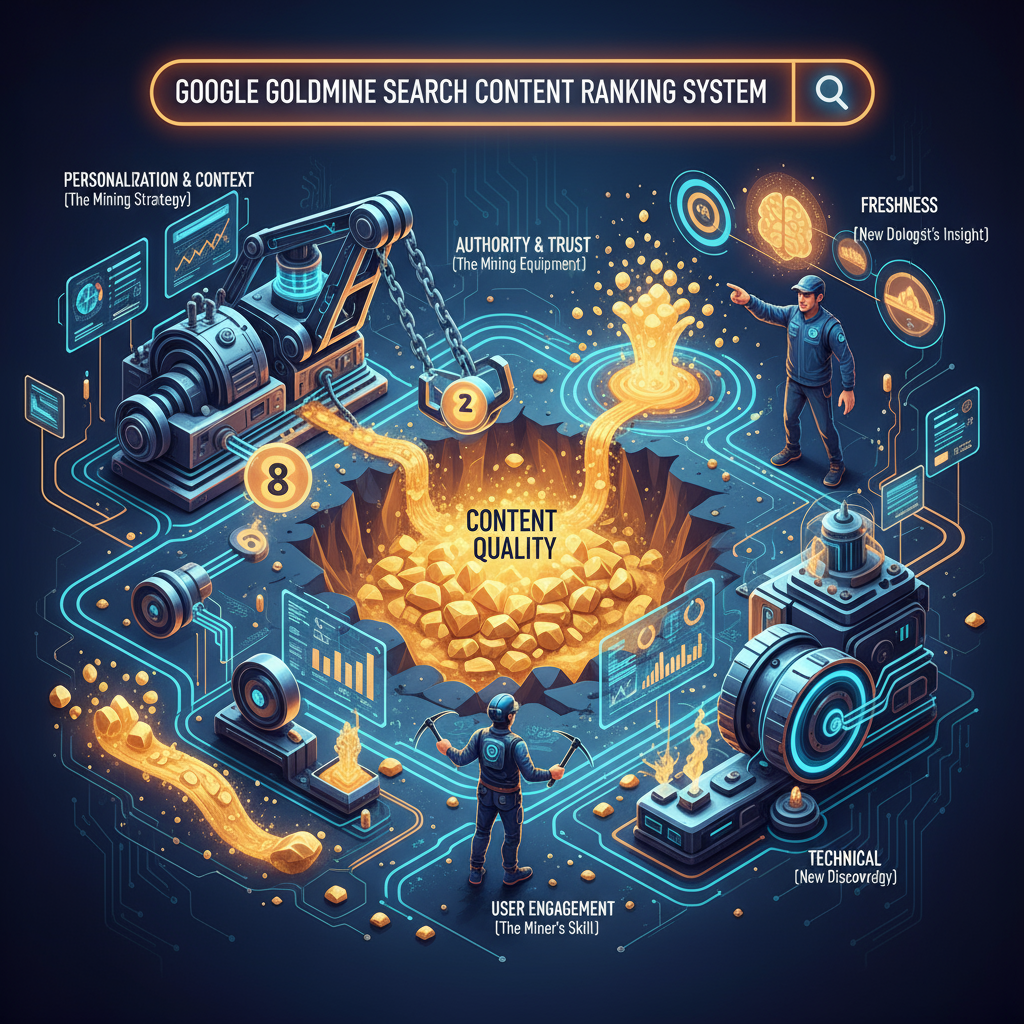
Google Goldmine Search Content Ranking System: How Google Evaluates Title Tags and SERP Quality
Google’s search ranking algorithm is a complex and continuously evolving system designed to provide users with the most relevant and high-quality search results. Among the many components powering Google’s algorithm is the lesser-known but influential Google Goldmine Search Content Ranking System. This system specifically evaluates how title tags, H1 tags, and other signals contribute to the overall ranking and quality of search engine results pages (SERPs).
In this article, we will explore what the Goldmine system is, its impact on SERP snippets, penalty mechanisms in place for poor titles, and how you can optimize your content to align with its requirements. Whether you are a beginner SEO or an advanced practitioner, these actionable insights will help you craft better title tags and improve your site’s visibility on Google.
What Is the Google Goldmine Search Content Ranking System?
The Google Goldmine Search Content Ranking System is an internal Google algorithm used to analyze and score the quality of content on web pages, especially focusing on title tags, H1 tags, and anchor text. Its primary purpose is to ensure that titles and snippets shown in the Google SERPs accurately represent the content of the page and are appealing to users, which ultimately influences click-through rates and ranking positions.
This system came to public attention through leaked information revealing Google’s approach to better understand and score page titles beyond simple keyword matching. Central to Goldmine’s evaluation process is a metric known as the GoldminePageScore, which aggregates multiple quality signals to rank how well a title tag and other associated elements reflect page relevance and quality.
Historically, Google’s reliance on manually entered title tags without further validation has sometimes led to poor user experiences, with misleading or spammy titles appearing in search results. Goldmine was introduced to mitigate these issues by using advanced data models to evaluate the consistency and trustworthiness of titles and anchor texts across the web.
In practice, Goldmine compares the title tag, H1 tag, anchor text from internal and external links, and other content signals to determine if they are aligned and of high quality. Pages that score well are rewarded with enhanced visibility, while low-quality or mismatched titles are penalized or automatically replaced in the snippet.
How Google Goldmine Impacts SERP Snippets and Rankings
One of the most significant ways the Goldmine system influences SEO is through the construction of SERP snippets. When a user enters a query, Goldmine helps Google decide which title tags and descriptions best represent the page content for display in search results.
Goldmine’s analysis affects:
- Title tag selection: Determines whether Google’s algorithm uses the provided title tag or chooses a more appropriate alternative from page content or anchor text.
- Snippet quality: Ensures that snippets are relevant and engaging, increasing the likelihood users will click.
- User engagement: By showing more accurate titles and snippets, it improves the overall user experience and reduces bounce rates.
When a title tag is deemed low quality, misleading, or stuffed with keywords, Goldmine’s penalty mechanisms may replace it with a more natural and relevant snippet generated from H1 tags, page body content, or link anchor text. This dynamic adjustment affects ranking indirectly because Google favors high-quality, user-friendly snippets that meet its quality standards.
Goldmine also works closely with Google’s core ranking updates to reinforce the importance of title tag quality as a ranking factor. Sites that consistently optimize their titles and related content signals see improved SERP placement, while those that neglect these elements may suffer ranking drops or reduced CTR (click-through rate).
Penalty Mechanisms and Quality Filters in Goldmine
The Goldmine system incorporates a set of penalty mechanisms and quality filters focused on deterring poor SEO practices related to title tags and snippets. Some key aspects include:
- Penalties for misleading titles: Titles that do not accurately describe the page content or use deceptive language can trigger penalties that down-rank the page or cause snippet modification.
- Spam detection: Goldmine judges quality signals to filter out spammy or keyword-stuffed title tags that attempt to manipulate rankings.
- Data-driven decision making: Using machine learning models, Goldmine evaluates signals such as anchor text consistency, click-through rates, and user behavior to identify low-quality titles.
These penalties serve not only to uphold quality standards but also to encourage site owners to maintain clean, relevant, and descriptive titles that accurately reflect page content.
Optimizing Title Tags and H1 for Better Goldmine Scores
To improve your GoldminePageScore and ensure your titles perform well in Google’s rankings and snippets, follow these best practices for optimizing title tags and H1 elements:
- Craft descriptive and concise title tags: Your title tag should clearly communicate the page’s main topic within 50-60 characters, incorporating primary keywords naturally without stuffing.
- Align your H1 tag with the title tag: Consistency between the H1 and title tag reinforces relevance signals. The H1 should complement the title by expanding or emphasizing the topic without duplicating it word-for-word.
- Use relevant keywords carefully: Place your target keywords near the beginning of the title tag and H1, but avoid overusing keywords which can trigger spam filters.
- Incorporate anchor text strategically: Ensure internal and external linking uses descriptive anchor text that matches or closely relates to your title and page topic to strengthen contextual relevance.
- Avoid clickbait or misleading phrasing: Titles should honestly represent the page content to prevent penalties and enhance user trust.
- Focus on readability and user intent: Write titles that appeal to your audience’s needs and questions to improve click-through rates and engagement.
Applying these practices will help your pages score higher on Goldmine metrics and improve their chances of ranking higher in search results with attractive, relevant snippets.
SEO Tips Based on Goldmine Insights
- Avoid common pitfalls: Steer clear of keyword stuffing, vague titles, and inconsistent H1 tags that can trigger Goldmine penalties.
- Enhance snippet attractiveness: Use compelling language, include numbers or power words, and make sure your title is enticing but accurate.
- Use auditing tools: Regularly audit your website’s title tags and meta data using SEO tools to identify issues before they affect rankings.
- Monitor SERP appearance: Track how Google displays your titles and snippets and adjust accordingly if you notice replacements or modifications.
Implementing these tips will not only align your content with Goldmine’s requirements but also boost your overall SEO performance.
Broader Ranking Factors to Consider Alongside Goldmine
While Goldmine focuses heavily on title tag quality and snippet construction, successful SEO requires attention to other Google ranking factors. According to insights from SEO authorities like Backlinko and WordStream, the following elements are crucial:
- Content quality and depth: Your pages should provide valuable, original, and comprehensive content that satisfies user intent.
- User engagement metrics: Bounce rate, dwell time, and click-through rate inform Google about your content’s usefulness.
- TF-IDF and semantic relevance: Incorporating terms semantically related to your keywords helps Google better understand your content context and improves indexing.
- Linking strategies: Both internal and external links build your site’s authority and relevance. Use descriptive anchor text and link to reputable sources.
Combining these factors with Goldmine-optimized title tags creates a synergistic effect that greatly improves your overall search visibility and rankings.
Case Studies and Real-World Examples
Many websites have seen measurable improvements in their search performance after applying Goldmine-informed SEO strategies. Here are some notable examples:
- Example 1: A technology blog revised over 200 outdated title tags, aligning them with H1 tags and removing keyword stuffing. Within 3 months, their average ranking position improved by 15%, and organic traffic increased by 28%.
- Example 2: An ecommerce store audited and restructured its anchor texts to better match page content and titles, reducing snippet replacements by Google by over 40%, resulting in higher CTR and sales.
- Example 3: A health site eliminated misleading clickbait titles, which led to a 12% decrease in bounce rate and a rise in user engagement metrics, positively influencing rankings.
These cases demonstrate that investing time in Goldmine-aligned title optimization can lead to tangible SEO benefits. The lessons learned underscore the importance of title tag accuracy, consistency, and alignment with overall content strategy.
Conclusion
The Google Goldmine Search Content Ranking System plays a vital role in how Google evaluates title tags and constructs SERP snippets. By understanding its mechanisms, penalty filters, and quality signals, you can optimize your titles and related on-page elements to improve your GoldminePageScore and boost your rankings.
Apply best practices such as crafting clear, relevant title tags; aligning H1 and anchor text; and avoiding misleading tactics to comply with Goldmine standards. Stay proactive by regularly auditing your SEO elements and adapting as Google’s systems evolve.
For more on how to write effective titles and stay ahead of algorithm updates, check out our guides on How to Write SEO-Friendly Title Tags, Understanding Google’s Core Algorithm Updates, and Best Practices for SEO Content Structure. Enhance your SEO audits using our recommended SEO Auditing Tools for Title Tags and Meta Data.
Start auditing your titles today and improve your SERP presence with Google Goldmine insights!