
For a fortnight, SpaceX looked like the only story in markets. The most-watched listing of the year arrived with the kind of momentum reserved for companies that have spent two decades building mythology in private — and then, just as quickly, the gravity of public markets reasserted itself. Two weeks after its debut, the stock has retraced almost all of its early gains, and the questions investors were too excited to ask in week one are now the only ones that matter. Chief among them: can any company, even this one, justify a valuation north of $2 trillion? And buried in the filings, a stranger question still — what happens when the constraint on growth isn’t capital or talent, but water?
The debut and the come-down
SpaceX went public on or around June 12, 2026, at roughly its $150 offer price, and the open was everything the bulls wanted. Shares spiked above $200 in the opening sessions, a pop that briefly validated the narrative of a generational company finally available to public investors. For a few days, the market behaved as though scarcity of access — not fundamentals — set the price.
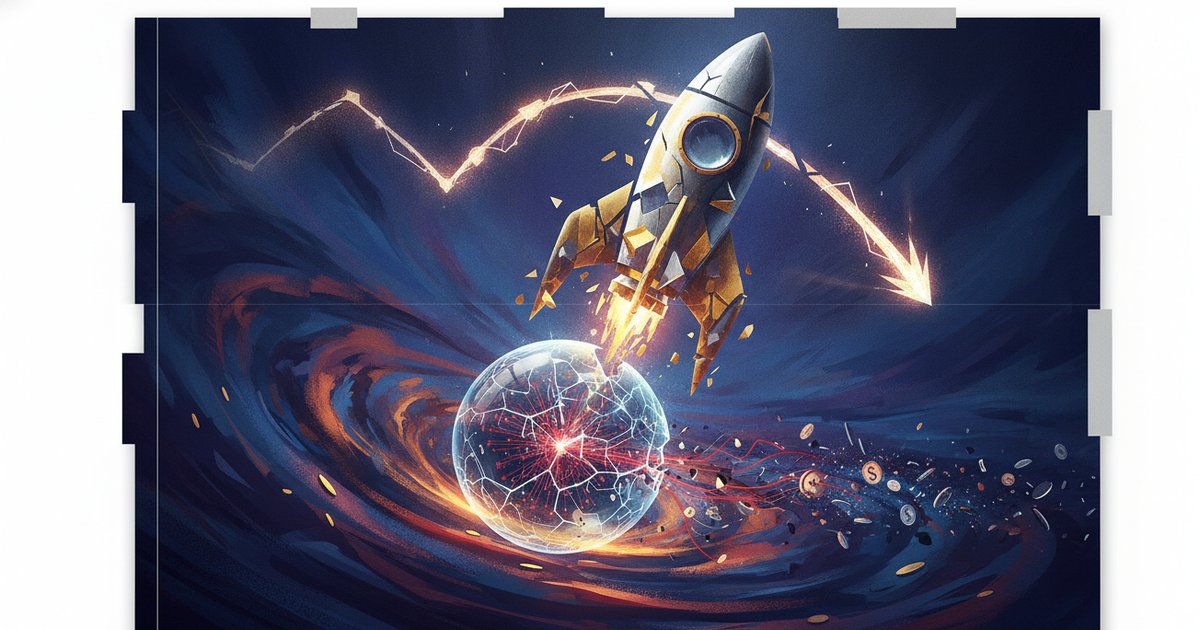
The come-down was just as instructive. By June 22 the stock was down roughly 16% in a single session, and it closed near $156 on June 23, according to reporting from CBS News and NBC News on a broader tech sell-off that also hit Nvidia and Alphabet. That is a brutal round trip: from a high above $200 back to within a few dollars of the offer price in under two weeks. The early buyers who chased the open are now underwater; the IPO allocation holders are sitting on a sliver of paper gain that could evaporate on any down day.
What changed is not the company but the lens. A valuation exceeding roughly $2 trillion is not a number you grow into casually — it implies a future in which SpaceX is not merely the dominant launch provider and Starlink operator, but a foundational layer of the next computing era. Public investors, unlike late-stage private backers, have to mark that bet to market every single day. The slide back toward $150 is the sound of that re-pricing happening in real time.
The risk nobody priced
The most revealing detail of this listing isn’t in the price chart — it’s in the paperwork. In an amendment to its IPO filing, SpaceX warned investors that access to water is becoming a critical factor for operating and expanding large-scale AI infrastructure, according to coverage from imFounder’s tech news roundup in June 2026. It is a disclosure rarely seen stated so plainly by a company of this profile, and it deserves more attention than it has received.
The logic is unglamorous but unavoidable. The AI build-out runs on data centres, data centres run hot, and the cheapest way to keep dense compute clusters cool at scale has historically involved enormous volumes of water. As a company positions itself around AI infrastructure — whether for its own constellation, compute-in-orbit ambitions, or ground-based facilities — it inherits the physical limits of that build-out. Power gets the headlines; water is the quieter, equally binding constraint.
Framed as a risk factor, water becomes a strategic variable rather than an operational footnote. Resource access can gate where you build, how fast you scale, and whether a given site ever clears the approvals it needs. Environmental reviews and regulatory sign-offs — already a recurring friction for SpaceX’s launch operations in Texas and Florida — extend naturally to large thirsty facilities. When a filing names water as a material risk, it is signalling that the company’s growth curve can be throttled by something no balance sheet can simply buy its way around.
- Resource access as strategy: water and power availability increasingly determine site selection for AI-scale infrastructure, not the other way round.
- Approvals as gating factors: environmental and regulatory clearances can delay or block expansion regardless of capital on hand.
- Disclosure as signal: putting water in a risk section tells investors this is a live, material constraint — not a hypothetical.

Public markets vs private mythology
For most of its life, SpaceX has been valued by people who wanted to believe — visionary backers, sovereign funds, and insiders pricing a story arc that stretches to Mars. Private rounds reward conviction and patience. Public markets reward neither for long. The mood that greeted this listing was demand-for-returns, and that mood is unsentimental about legends.
Volatility is the tax a private-era icon pays on entering the public arena. The same investors who marvelled at reusable rockets will, the moment macro sentiment sours or a rate expectation shifts, sell first and rationalise later — which is roughly what the June 22–23 sell-off looked like across the tech complex. A $2 trillion company cannot hide inside a quarterly narrative; it is repriced continuously against every alternative use of capital.
This is also where the financing strategy gets interesting. Companies funding capital-intensive expansion — launch infrastructure, satellite manufacturing, AI-scale data facilities — increasingly look to bond markets as well as equity, because debt lets them build without diluting holders further or surrendering to equity volatility. For a business with predictable, contracted cash flows from launch and connectivity services, tapping debt to fund the next phase of expansion is a rational move, and one public investors will scrutinise closely.
Above all, going public forces disclosure, and disclosure forces honesty. The water warning is a perfect example: it is precisely the kind of constraint a private company can keep internal, but a public one must surface. The act of listing drags the unglamorous realities — resource limits, regulatory exposure, the true cost of the build-out — into the open where the market can argue about them. That is the bargain. You get access to deeper capital pools; you give up the privilege of telling only the heroic version of your story.
Why it matters beyond SpaceX
SpaceX’s reception is a dress rehearsal. The most consequential listings of the coming cycle are widely expected to come from the AI lab cohort — an eventual OpenAI or Anthropic IPO race — and they will arrive carrying even more mythology and even thinner conventional fundamentals. The SpaceX round trip is a preview of how public markets will treat those debuts: enormous opening enthusiasm, followed by hard questions about whether the valuation survives daily marking.
The water disclosure matters most here. The entire AI thesis assumes a build-out can keep compounding — more compute, more data centres, more capacity. SpaceX has effectively put a flag in the ground that says the physical world pushes back. Power grids strain, water is finite, and approvals take time. Any company selling investors an uncapped AI growth story will have to answer for the same constraints, and the smart ones will disclose them before the market discovers them the hard way.
For an India-first reader, there are two clear threads. First, the satcom and space angle: SpaceX-class connectivity, and Starlink’s regulatory journey in India, sit inside a domestic landscape where homegrown launch and satellite ambitions are accelerating and where spectrum, security, and licensing debates are very much live. A publicly listed, scrutinised SpaceX changes the competitive and diplomatic backdrop for all of that. Second, the resource constraint travels. India is among the world’s most water-stressed major economies even as it courts hyperscale data-centre investment. If water is a material risk for the most resource-rich operators on earth, it is a strategic planning question for every state competing to host AI infrastructure — and a genuine opportunity for those that can offer power and cooling sustainably.
The SpaceX listing was sold as a coronation. What the first two weeks actually delivered is more useful: a reminder that public markets convert mythology into arithmetic, and that the next era of computing will be built not just on capital and code, but on power, permits, and water. That is the spotlight worth keeping on this story long after the opening-day pop is forgotten.
