
India’s rooftop-solar market is easy to romanticise and hard to run. The panels are cheap, the sun is abundant, and the government keeps repeating that homes and housing societies should generate their own power. Yet installing a system on a real roof, financing it for a real household, and servicing it for a decade is a slog of paperwork, subsidies and site visits. That is the gap SolarSquare is betting it can turn into a business — and its latest funding round suggests investors believe the messy middle is where the money is.
The raise
Residential-solar company SolarSquare has raised a Series C at a valuation of roughly $470 million, with its co-founders retaining a stake of about 27.5%, according to a report by Entrackr (July 3, 2026). The capital is earmarked for scaling residential solar — the unglamorous work of getting more systems onto more rooftops, and keeping them running afterwards. The round was about $53 million of fresh primary capital led by B Capital, with Lightspeed, Lowercarbon and Rainmatter participating (and MS Dhoni’s family office joining) — and, notably, no founder secondary: the ~27.5% is retained ownership, not a cash-out.
What stands out here is not just the number but the composition of it. A $470M valuation puts SolarSquare firmly in the ranks of India’s better-capitalised cleantech players, at a stage where the market is no longer rewarding vision decks and is instead scrutinising unit economics, service costs and repeat installs. Series C money is growth money: it is meant to buy geographic expansion, deeper financing capacity, and the operational muscle needed to convert a fragmented, high-friction category into something that looks like a repeatable machine.
For a company selling to individual homeowners and housing societies, that machine is expensive to build. Every rooftop is a bespoke project. Every state has its own subsidy quirks. The capital, in other words, is not going toward a single moonshot but toward a thousand small operational improvements — the kind that compound quietly and are almost impossible to fake.
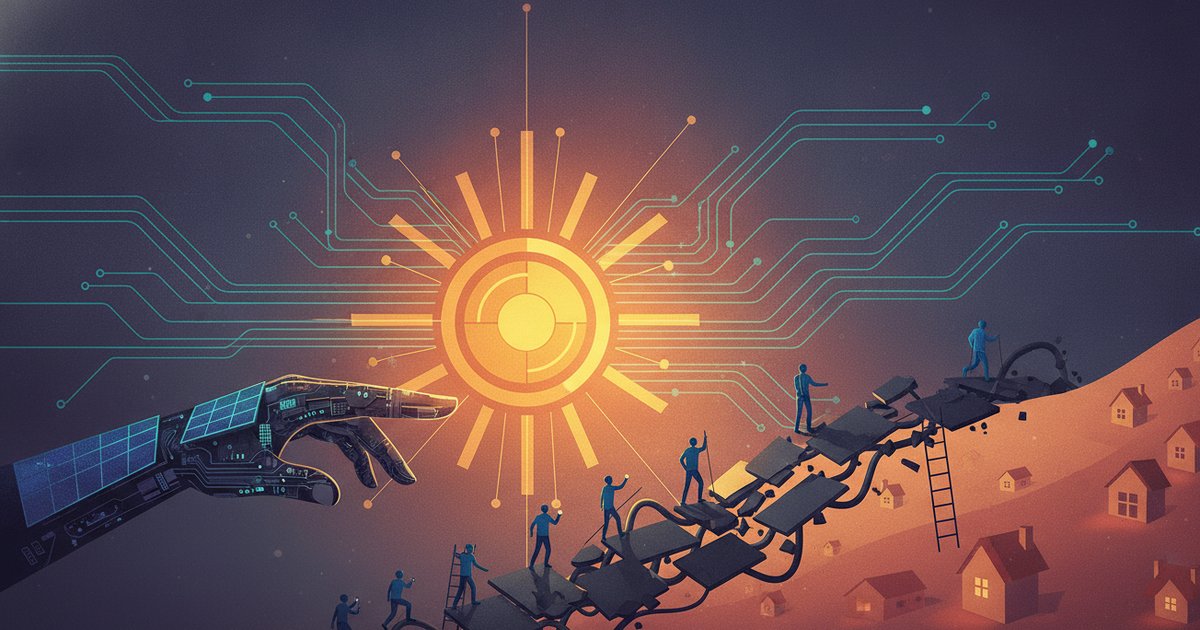
Why rooftop solar is hard
The hardware is the easy part. Solar panels have become a commodity; anyone can buy them. The difficulty of residential solar lives in three places, and none of them are the module.
- Financing. A rooftop system is a large upfront cost against a long, slow payback. Households want the savings without the capital outlay, which means the company must either broker loans, offer instalment structures, or absorb balance-sheet risk. Getting financing right — affordable, quick to approve, and viable at scale — is arguably the single biggest lever in the category.
- Installation. Every roof is different. Orientation, shading, structural quality, wiring, and access all vary. A install that goes smoothly is invisible; one that goes wrong generates complaints, rework, and reputational damage. Doing this consistently across cities requires trained crews, supply chains, and quality control that don’t scale automatically.
- After-sales. A solar system is a ten-to-twenty-year relationship, not a transaction. Panels degrade, inverters fail, monitoring matters. The companies that win are the ones customers trust to show up two years later — and that trust is won or lost in service, not sales.
Layered on top is policy. Subsidies and net-metering rules — the mechanism that lets a household sell surplus power back to the grid — vary meaningfully across states and change over time. That variability makes the customer proposition genuinely different depending on where you live, and it forces operators to navigate a patchwork of regulations rather than a single national playbook. Add to this a consumer edge that is riddled with informal, unstandardised installers, and you have a category where trust and standardisation are competitive weapons. A homeowner considering a five-to-six-figure purchase from a fragmented market of small vendors is understandably nervous; a brand that standardises quality and stands behind it can charge a premium and earn loyalty.
This is why rooftop solar rewards patient operators over clever marketers. The work is unglamorous, distributed, and relentlessly physical. It does not lend itself to shortcuts.
The founder-ownership signal
Now to the detail that industry watchers have latched onto: the co-founders retaining roughly 27.5% at Series C. In startup terms, that is high. By the time a company reaches its third institutional round, founders have typically been diluted through seed, Series A and Series B, often ending up with a materially smaller slice. A stake near 27.5% this late suggests something specific about how the company has been built.
Industry analysis in 2026 reads this as a marker of disciplined dilution and negotiating leverage — a signal that the founders raised carefully, gave away equity sparingly, and came to the table with enough momentum to set terms rather than accept them. You do not preserve that much ownership by accident. You do it by needing less outside money at each stage, by demonstrating traction that shifts bargaining power toward the company, or both.
The signal cuts in a few directions. To later investors, a high retained founder stake is reassuring: it means the people running the business have most of their net worth riding on the outcome, aligning them tightly with long-term value rather than a quick exit. It also implies conviction — founders who believed enough in the trajectory to protect their ownership rather than cash out or over-raise. And in a capital-intensive category where the temptation to raise big and burn fast is real, disciplined dilution hints at a management team that treats capital as a tool rather than a trophy.
None of this guarantees success. Ownership discipline can also reflect a company that simply hasn’t needed to raise defensive war chests yet. But in a sector where execution matters more than firepower, founders who still own a meaningful chunk of the business — and who therefore feel every operational decision in their own equity — are exactly the kind of aligned operators the last mile demands.
The India read
Zoom out and the strategic logic sharpens. India’s clean-energy push has made residential and distributed solar a national priority, with sustained policy attention on getting rooftop systems onto homes and, increasingly, onto housing societies where shared generation can serve many families at once. The direction of travel is clear: distributed energy — power generated close to where it is consumed — is a structural bet on the country’s grid, its climate commitments, and its rising household electricity demand.
The opportunity is enormous precisely because it is fragmented. Millions of rooftops, thousands of housing societies, and a consumer base that is warming to solar but still wary of unreliable installers. This is a market that cannot be won with a single brilliant product; it must be won city by city, roof by roof, service call by service call.
That is why, in Indian cleantech, execution is the moat. Panels are commoditised. Subsidies are available to everyone. What separates a durable business from a well-funded also-ran is the ability to finance affordably, install reliably, and service dependably — at scale, across a regulatory patchwork, for a customer relationship measured in decades. SolarSquare’s raise is a bet that it can build that operational moat faster and deeper than rivals, and that a disciplined, founder-aligned team is the right vehicle to do it.
The verdict will not come from a valuation headline. It will come from whether, five years out, the company is still the one homeowners call when the inverter blinks red. In rooftop solar, the boring metrics are the ones that matter — and the winners will be the companies that never stopped treating the last mile as the whole business.
