Influencer marketing has a scale problem. When a brand works with ten creators, a spreadsheet and a diligent campaign manager can handle it. When it works with ten thousand — across markets, languages and formats — the whole apparatus of manual sourcing, briefing, contracting and reporting starts to buckle. That gap is exactly what a wave of AI startups is now pitching to close, and one of them just put money behind the claim.
The raise and the pitch
Hypefy raised a $7.2M Series A to automate influencer marketing with AI, according to Vestbee’s July 2026 roundup of European VC activity. The pitch is straightforward in ambition if not in execution: use AI to run the full lifecycle of a creator campaign — discovery, matching, campaign management and measurement — at a scale that manual teams cannot match.
The traction the company points to is a brand roster that reads like a CMO’s contact list: NIVEA, Unilever, ABOUT YOU, Philips, PepsiCo, McDonald’s, Samsung, Glovo and Schwarzkopf. (These details come from a single source, Vestbee, and are worth treating as such until corroborated.) The logos matter less for their marquee value than for what they imply — these are advertisers that run enormous, multi-market campaigns, and they are the ones for whom the manual model is most obviously broken.
Vestbee frames the round as part of a broader shift toward AI-orchestrated creator marketing: campaigns are scaling beyond what manual sourcing, briefing and measurement can realistically handle, and the tooling is racing to catch up. That framing is the real story here — not one company’s cheque, but the market logic that made the cheque make sense.

Why automate now
The economics have flipped. For years, influencer marketing was a boutique activity: a handful of hero creators, hand-picked, hand-managed. The industry’s centre of gravity has since moved to volume — hundreds or thousands of nano and micro-creators activated in parallel, because that’s where engagement and cost-efficiency now live. But volume is exactly where humans hit a wall.
Consider the manual bottlenecks a large campaign runs into:
- Discovery. Sifting through millions of profiles to find creators who fit a brief, a budget and an audience is not a task that scales linearly with headcount.
- Matching. Pairing a creator’s real (not vanity) audience to a brand’s target segment requires cross-referencing data most teams don’t have time to interrogate.
- Briefing and coordination. Managing thousands of individual relationships, deliverables and deadlines is administrative quicksand.
- Measurement. Rolling up performance across thousands of posts into something a CFO will accept as ROI is where campaigns quietly die.
Layer on the attribution and ROI pressure brands now apply to every marketing rupee and euro, and the case for automation writes itself. Advertisers no longer accept “reach” as an outcome; they want measured, comparable, defensible performance. AI orchestration promises to deliver that at a scale — and speed — that a human team simply can’t, which is why the pitch lands with the exact brands on Hypefy’s roster.
What still needs a human
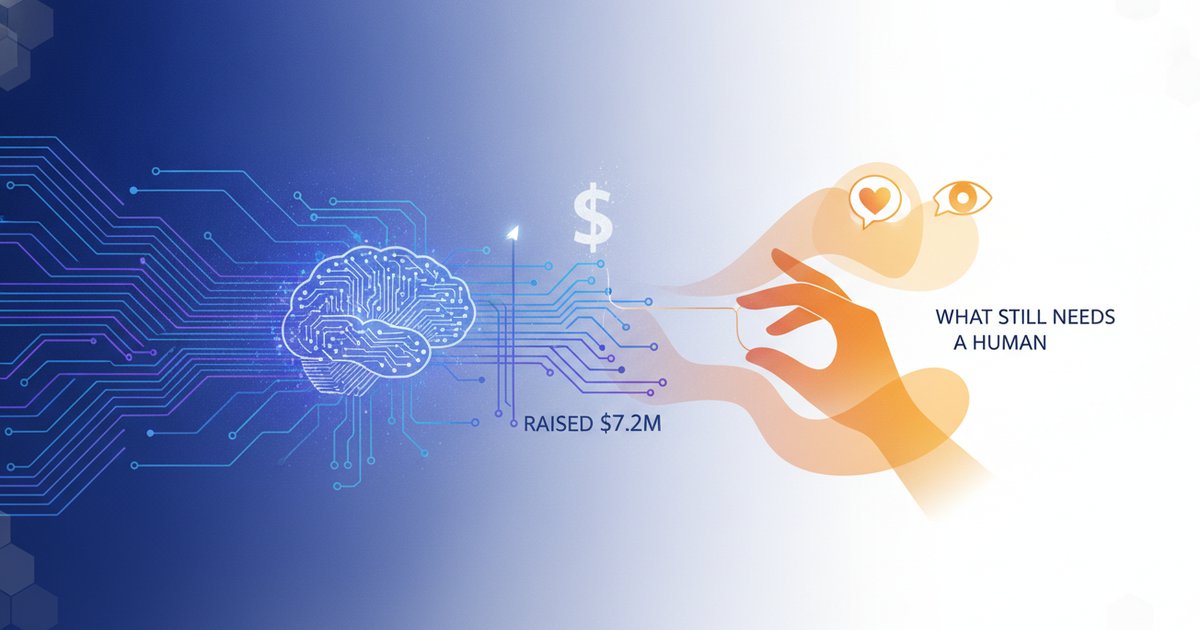
Here is where the sober part of the analysis begins. Automation compresses the operational middle of influencer marketing — the sourcing, the coordination, the reporting. It does not, and should not, automate the parts that make the channel work in the first place.
Taste and brand safety. An algorithm can flag a creator whose past posts pose reputational risk, but judging whether a partnership feels right for a brand — the tone, the values, the subtle cultural fit — is still a human call. Brand safety is not only about avoiding disasters; it’s about the harder-to-model question of whether an association elevates or cheapens a brand.
Relationships. Creators are not media inventory. The best long-term partnerships are built on trust, negotiation and mutual respect — things that don’t survive being fully intermediated by software. A creator who feels like a line item churns; one who feels like a partner delivers their best work.
Disclosure and authenticity. As AI touches more of the workflow, the risk of a homogenised, botted feel grows. Audiences are unusually good at sniffing out inauthentic, template-driven content, and regulators are increasingly firm on disclosure. The moment creator marketing starts to feel machine-generated, its core advantage — trust — evaporates. Automation should free humans to protect authenticity, not erode it.
The honest read is that AI orchestration works best as a co-pilot: it handles the volume, the matching math and the measurement plumbing, while humans own taste, relationships and the ethical guardrails. Vendors who suggest otherwise are overselling.
The India read
India is arguably the market where this thesis matters most. It is one of the world’s largest creator and influencer economies by sheer participant count, and its structure is tailor-made for the scale problem AI claims to solve.
Two features stand out. First, vernacular fragmentation: campaigns that want national reach can’t run in English alone — they need creators working across dozens of languages and regional cultures. Second, the nano and micro-creator base: India’s most cost-effective engagement often sits with creators who have small but fiercely loyal, hyper-local audiences. Both dynamics push toward campaigns with thousands of participants, which is precisely the territory where manual management collapses and orchestration tooling earns its keep.
But the human caveats bite harder here, not less. Cultural nuance, linguistic subtlety and community trust are not evenly distributed problems an off-the-shelf model trained on Western data will solve. A tool that’s excellent at matching English-language beauty creators in Europe may be blind to the codes of a Tamil food creator or a Bhojpuri comedy account.
So how should Indian brands and agencies trial AI orchestration without getting burned? A few practical principles:
- Start narrow. Pilot automation on the parts that are genuinely painful — discovery and reporting — before handing over creative matching or relationship management.
- Keep a human on brand safety. Never let a tool auto-approve activations at scale without a taste-and-values checkpoint, especially across unfamiliar regional contexts.
- Test on vernacular. Any platform’s real value in India is proven not on metro English creators but on regional-language, nano-tier ones. Demand that proof.
- Measure incrementality, not just volume. The whole promise is better ROI. Hold vendors to attribution that a finance team would actually sign off on.
- Protect disclosure. Build compliant disclosure into automated workflows from day one; retrofitting it after a regulatory or PR scare is far more expensive.
The Hypefy round is a useful signal that global capital believes AI orchestration is the next phase of creator marketing. For India’s vast, multilingual creator economy, the opportunity is real — the manual model genuinely doesn’t scale to where the market is heading. But the winners won’t be the brands that automate the most. They’ll be the ones that automate the right things, and keep humans firmly in charge of the rest.
