
Cisco is about to run one of the largest corporate AI experiments attempted so far. From the start of its new fiscal year at the end of July, the networking giant plans to give a personalised AI agent to every one of its roughly 90,000 employees — moving from limited pilots to a full, company-wide rollout, according to comments from chief financial officer Mark Patterson reported by Fortune. Rather than a single chatbot parked on an internal website, these agents are meant to work as digital co-workers embedded in everyday tools.
A company-wide AI rollout inside Cisco
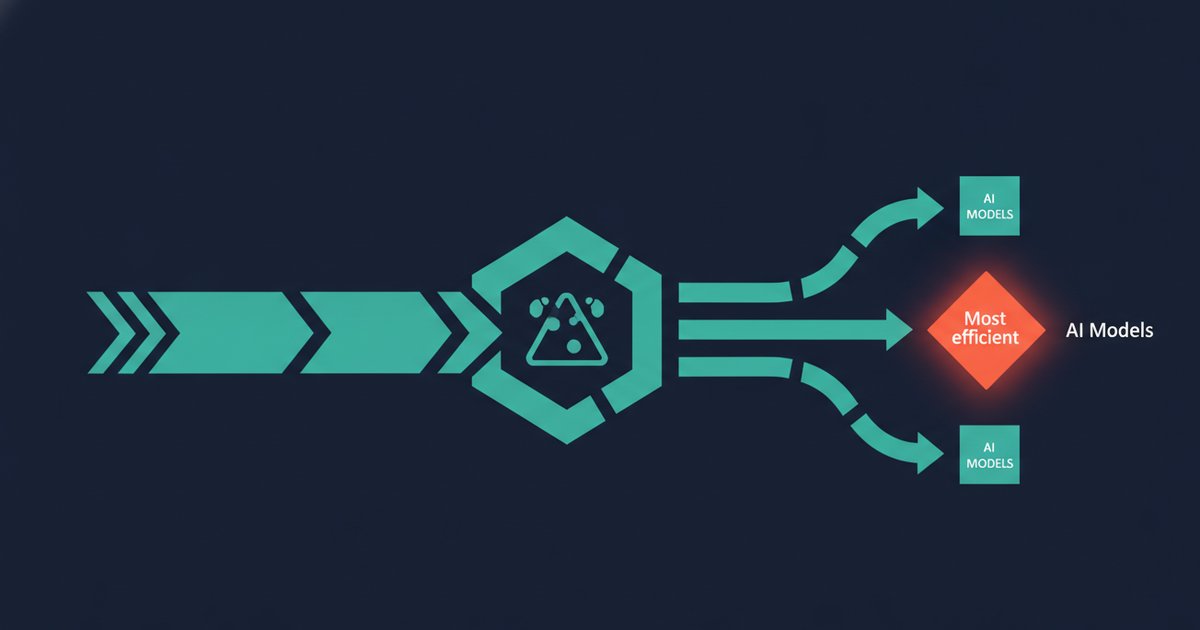
Each agent is designed to take on routine tasks, answer questions and, crucially, decide which underlying AI model is best suited to a given request. By handling that orchestration automatically, Cisco hopes to give employees one simple interface while keeping tight control over performance, cost and security behind the scenes. “It knows which tool is most effective and most efficient,” Patterson told Fortune, describing an in-house stack built to “query the different models based on the particular use case.”
Internally, leadership has framed this as a strategic shift rather than a side project: AI is meant to become an operating layer for the whole company. “AI is the most significant technology transition that we’ve seen in probably our lifetime,” Patterson said — adding that in 26 years at Cisco he had “never seen as much opportunity as we have today.”
What these AI agents will actually do
Cisco’s vision goes well beyond simple question-and-answer help. For employees, an agent is expected to become the first stop for information, approvals and small but time-consuming tasks. In human resources, an agent can answer policy questions, help staff navigate benefits and automate standard requests that once needed email threads or support tickets. In IT and operations, agents can gather system data, summarise incidents and route issues to the right people or tools.
In finance, the shift is already concrete. Patterson says AI now produces “80–90% of the first draft, at least” of the MD&A — the mandatory narrative section of Cisco’s SEC filings — leaving human teams to focus on review and judgement. The company is also building an investor-relations tool that digests its own financial history and rivals’ earnings calls, and a “CFO cockpit” dashboard to synthesise performance data. Across departments the pattern is similar: the agent does the heavy lifting on retrieval, structuring and summarisation, while people concentrate on decisions and exceptions.
Why Cisco is doing this now
There are three main reasons behind the timing. First, the company believes AI has matured enough to deliver consistent value across multiple functions when it is carefully governed. Early deployments of internal assistants and domain-specific models have shown meaningful time savings and better employee experiences, which gives leadership the confidence to scale.
Second, cost discipline is central. Complex agent workflows can burn through tokens and compute, especially during extended planning or multi-step actions. By designing a stack that automatically picks the most efficient model for each request — and running much of the infrastructure on-premises — Cisco aims to keep AI spend predictable while still allowing experimentation. “It’s not going to burn a whole bunch of tokens with frontier models,” as Patterson put it.
Third, AI sits at the centre of Cisco’s own product story. The company has invested heavily in AI-driven networking, observability and security, and demand for its AI infrastructure is climbing: orders for AI-related hardware from hyperscalers reached around $2 billion in fiscal 2025, and Cisco has guided to roughly $9 billion for fiscal 2026. An internal rollout of agents doubles as both a proving ground and a showcase — if Cisco can run AI at this scale internally, it strengthens the pitch it makes to customers.
Security and governance: treating agents like new hires
Handing every employee an AI agent raises obvious safety questions. Cisco’s framing is that an agent should be governed much like a new employee — given a scoped identity, explicit permissions and ongoing oversight rather than open access to everything. That means being deliberate about which data each agent can reach, enforcing those boundaries, monitoring behaviour and keeping models away from sensitive information without clear guardrails.
To make that workable, Cisco has been building security into its agent platforms rather than bolting it on afterwards, so identity, policy and data boundaries are part of how agents are created and deployed. Internal teams have stressed keeping people and data at the centre of design decisions, writing explicit responsibility guidelines, and not trading away security for speed as new AI features ship.
How Cisco has been using AI internally already
The rollout is not Cisco’s first brush with AI at work. Over the past few years the company has introduced internal assistants that employees use to interact with IT, HR and other services, already handling a large volume of everyday requests — troubleshooting issues, answering common questions and helping staff navigate internal processes.
Feedback from those early deployments has shaped the broader agent strategy. Many employees find AI-driven support faster and more convenient than portals or email threads. But the company has also learned that dropping AI into old workflows does not fix deeper process problems: if work is still routed to the wrong team or a policy is unclear, an agent only delivers a faster version of a flawed experience. That lesson is pushing Cisco to rethink workflows and roles alongside its AI investments.
From Webex to agentic operations
Beyond core IT and HR, Cisco is weaving agents into its collaboration and customer-experience platforms. Within Webex, it has added assistants that can act as meeting concierges — preparing participants, translating content and extracting action items — and it has been expanding tooling that helps organisations design, deploy and manage digital and voice agents for their own contact-centre and collaboration use cases.
The company has described a broader “agentic” vision for operations, in which humans set goals and constraints while fleets of agents carry out routine work. In networking and observability, for instance, an AI assistant can watch telemetry, flag anomalies, suggest fixes and automate standard remediation. The new employee-wide agents fit in as the human interface — letting staff type or speak natural-language instructions while the system coordinates the complex actions behind them.
Culture change: every employee as an AI manager
Rolling out AI to 90,000 people is as much a culture project as a technology upgrade. Cisco’s leaders argue that, in the near future, every person will effectively manage a small team of AI agents. That demands new skills: framing good prompts, checking outputs for accuracy and bias, and judging when to trust automation versus when to override it.
To support the shift, the company is planning training, enablement programmes and internal communities where staff can share what works. Executives expect a degree of healthy competition as teams find new ways to simplify work and move faster. In that sense the rollout is also a bet on bottom-up innovation, letting employees help define how AI fits into their day-to-day jobs.
The risks and criticisms
As with any large AI initiative, the plan is drawing scepticism. Some observers worry about surveillance, fearing agents could quietly monitor employee behaviour or performance. Others question whether the benefits will be shared fairly, or whether the tools will mainly serve management by streamlining reporting and control. The concern is sharpened by context: Cisco has also been cutting thousands of roles as it leans harder into AI, which colours how a workforce-wide agent rollout is read.
There is also the risk of over-automation. If too many decisions are delegated to AI, employees can lose context or feel disconnected from the outcomes of their work. Cisco’s answer is that agents are meant to augment, not replace, human judgement — and that governance, transparency and the option to override the AI are non-negotiable. How convincingly it implements those principles will decide whether the rollout feels empowering or intrusive.
What this means for the future of work
Cisco’s move is a strong signal of where large enterprises think office work is heading: away from isolated pilots and towards integrated, company-wide agent platforms that sit between employees and complex systems. If it succeeds, it offers a blueprint for how other organisations can combine personalised assistance, secure infrastructure and clear governance to scale AI responsibly.
For employees, the immediate impact will show up in everyday friction — how long it takes to get answers, file requests, troubleshoot issues or prepare documents. For the wider market, it is a test of whether AI agents can operate at the scale of a global, highly regulated technology company without creating new risks that outweigh the gains. Either way, giving every worker an AI co-worker marks a new phase in the transformation of the modern workplace.
