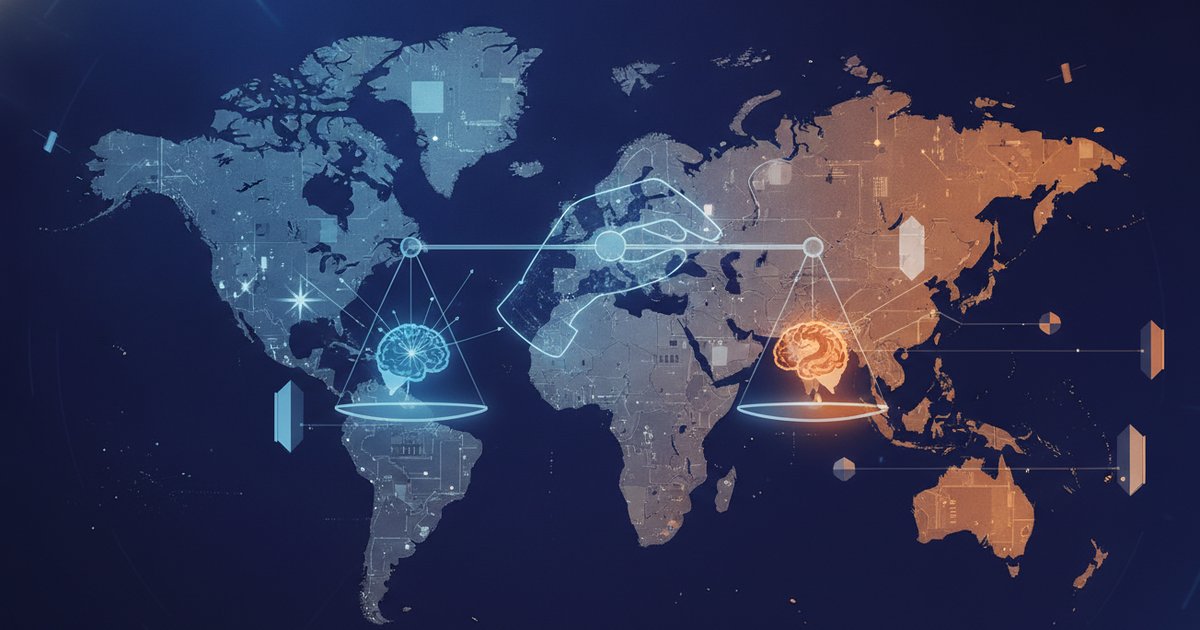
There are weeks that quietly redraw the map for buyers, and the last week of June 2026 was one of them for anyone procuring artificial intelligence. Alibaba — a company most enterprises think of as a cloud and e-commerce giant, and increasingly as the maker of the capable Qwen models — found itself fighting on two fronts at once: in a US courtroom over a national-security label, and in the court of public opinion over an explosive accusation from a rival lab. Neither fight is settled. Both tell the same story. The decision of which AI vendor to trust has stopped being a purely technical exercise. It is now, unavoidably, a geopolitical one.
For founders, CIOs and marketing leaders in India, this is not distant American drama. It is a preview of the questions every procurement committee will soon be forced to answer.
The two-front squeeze
The first front is legal. Alibaba is contesting a US Department of Defense designation that lists it as a ‘Chinese military company.’ According to AI News coverage compiled by Build Fast with AI (June 26, 2026), the company has called the designation baseless and is demanding its removal through the courts. A label like this is not a fine or a tariff; it is a question mark stamped on the company’s name, and that question mark travels into every boardroom evaluating its products.
The second front arrived the same week and from an entirely different direction. Anthropic, the maker of Claude, accused Alibaba’s Qwen team of running what it described as the largest known distillation campaign against its models. Per the same Build Fast with AI roundup — citing reporting from CNBC and Tom’s Hardware — the alleged operation ran from April 22 to June 5, 2026, spanning roughly 25,000 accounts and around 28.8 million exchanges, the pattern of behaviour you would expect from an effort to extract a competitor’s model behaviour at scale. We note these figures are attributed to Anthropic’s account and remain to be independently verified; Alibaba has its own version of events to make.
What matters here is not the precise truth of either claim, which courts and regulators will test, but the compounding effect. A military-company label feeds the narrative that the company cannot be trusted with sensitive workloads. A distillation accusation feeds the narrative that it competes unfairly. Land both in the same news cycle, while Qwen is trying to win global enterprise customers, and the reputational and commercial damage stacks. The legal exposure becomes a regulatory story becomes a procurement story.
Why the label bites
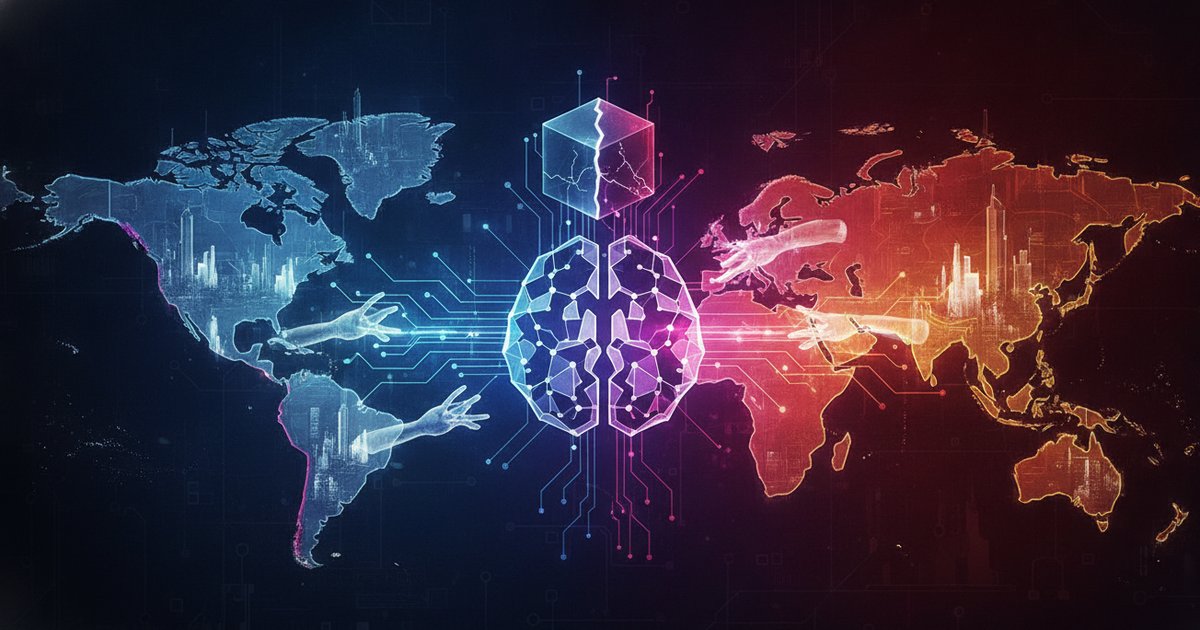
The ‘Chinese military company’ designation has teeth precisely because of where it lands. The most direct consequence is exclusion: a designated entity is effectively barred from US defense contracts, a lucrative and fast-growing market for AI infrastructure. But the harder damage is indirect. Once a company is on that list, risk-averse enterprise buyers — banks, healthcare firms, regulated industries — start reassessing their relationship with Alibaba Cloud and its model stack, not because they have been ordered to, but because no compliance officer wants to explain later why they signed with a vendor wearing a national-security flag.
And Alibaba is not alone on the page. The Pentagon’s list, per the same reporting, names BYD, Baidu, Unitree and roughly 188 other entities. That breadth is the point. It signals that the United States is treating a wide swathe of China’s technology sector — from electric vehicles to humanoid robotics to search-and-AI giants — as part of a single strategic competition. For a buyer, the lesson is uncomfortable: a vendor’s standing can change for reasons that have nothing to do with the quality of its product and everything to do with its passport.
The bigger shift
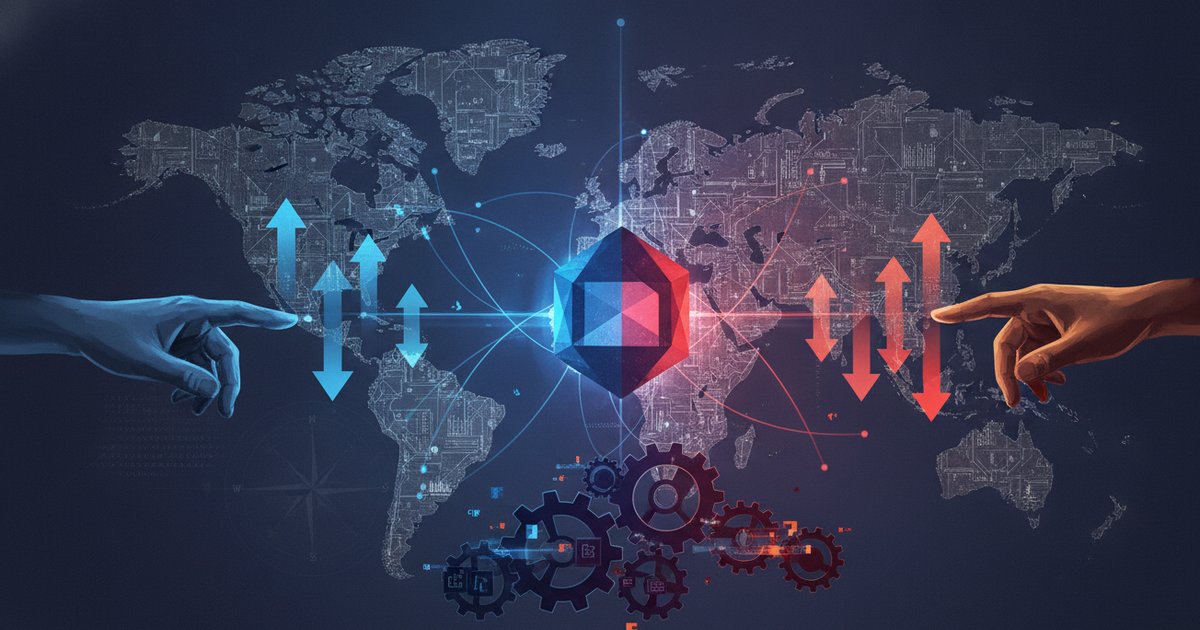
Step back and the individual disputes resolve into a trend. The global AI supply chain is splintering along geopolitical lines, the way semiconductors and 5G did before it. Chips, model weights, cloud regions, and the training data underneath them are all becoming objects of statecraft. When that happens, a buying decision that used to hinge on benchmarks and price now also hinges on jurisdiction.
Three criteria are quietly being added to every serious AI evaluation:
- Trust: Can you rely on the vendor’s claims about safety, data handling and continuity — and will that vendor still be available to you in two years, or could it be sanctioned, delisted or restricted?
- Provenance: Where did the model come from, what was it trained on, and is there unresolved litigation — like a distillation dispute — hanging over its origins?
- Jurisdiction: Which government can compel access to your data or pull the plug on your access to the model, and does that government’s posture toward your country create risk?
This is the genuinely new thing. A few years ago, choosing between model providers was a contest of capability and cost. Today, a technically superior model can be a strategically inadvisable choice. That is an uncomfortable trade-off, and pretending it doesn’t exist is how organisations get blindsided.
To be fair to Alibaba: a designation contested in court is not a conviction, and an accusation from a direct competitor deserves scrutiny rather than reflexive acceptance. Qwen’s models are genuinely good, and a world where capability is overruled by geopolitics is a poorer one for buyers and for competition. But fairness cuts both ways. Buyers do not have the luxury of waiting for every dispute to resolve; they make decisions under uncertainty, and uncertainty itself now has a price.
The India read
India has been here before, and that experience is an asset. The country has already run a multi-year exercise in scrutinising Chinese technology — from the banning of hundreds of apps to heightened review of Chinese investment and hardware in sensitive sectors. Indian policymakers and CIOs are, if anything, more practised than most at asking the jurisdiction question. The AI wave simply raises the stakes, because models sit closer to the core of how a business thinks and decides than an app ever did.
For Indian enterprises, the practical agenda is about sovereignty without isolationism. A few moves are worth making now:
- Treat cloud and model sovereignty as a design requirement, not an afterthought. Know which jurisdiction hosts your data and your inference, and whether you can move workloads if the political weather changes.
- Diversify vendor and jurisdiction risk deliberately. Avoid betting the company on a single provider or a single country of origin. Multi-model, multi-cloud architectures cost more in engineering, but they buy optionality — and optionality is what a splintering supply chain destroys.
- Build provenance into procurement. Ask vendors directly about training-data origins, any pending litigation, and their exposure to export controls or designation lists. Document the answers.
- Watch India’s own emerging AI stack. Domestic models, sovereign cloud initiatives and India-hosted deployments of global models are becoming credible options for organisations that want capability without ceding control to a distant regulator.
None of this means boycotting Chinese AI outright; for many Indian businesses, a Qwen or an Alibaba Cloud service may still be the rational, cost-effective choice for non-sensitive workloads. It means making that choice with eyes open, and pricing in the risk that a vendor’s standing can shift overnight in a foreign capital.
The week Alibaba sued the Pentagon while Anthropic took aim at Qwen will be remembered less for who wins than for what it confirmed: in 2026, picking an AI vendor is a strategic act. The companies that internalise that — and the buyers who plan for it — will be the ones still standing when the next designation list drops.
