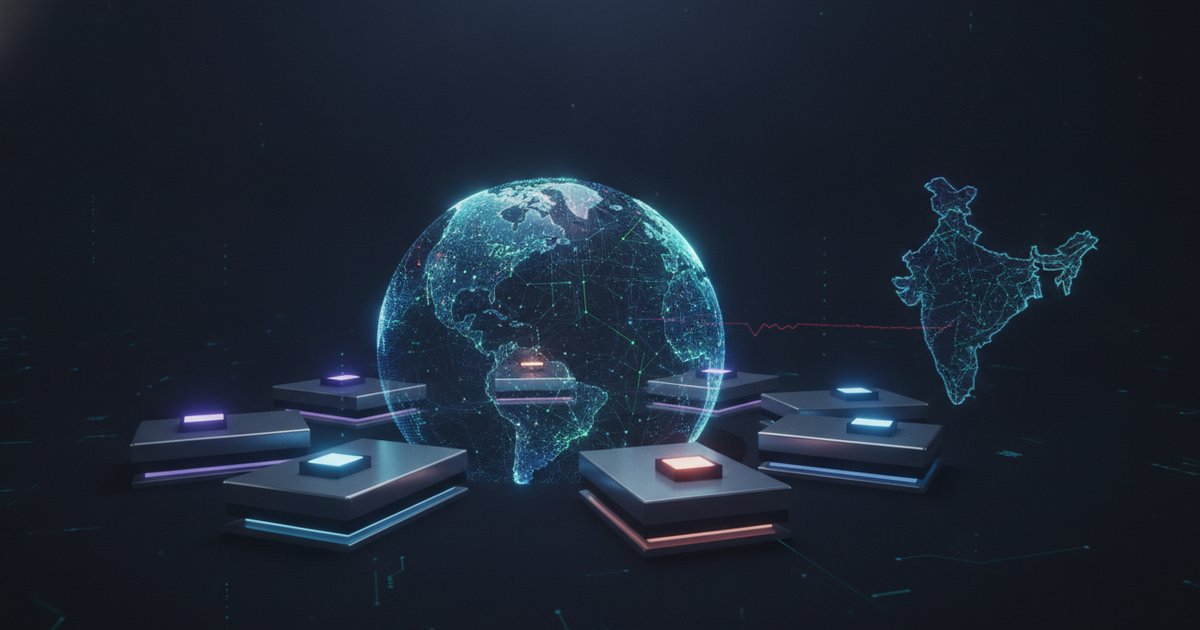
For years, the contest over artificial intelligence was framed as a race — who builds the biggest model, who ships the cleverest product, who corners the chip supply. That framing is now incomplete. The next phase of the AI story is about governance: who writes the rules, who agrees to enforce them, and who gets left writing rules for someone else’s technology. At this year’s G7, the outlines of an answer began to appear — and India was not in the room where it happened.
The signal is worth taking seriously. When the people building frontier models start lobbying governments to coordinate among themselves, the action is moving from the lab to the negotiating table. For India’s founders, policymakers and operators, the question is no longer whether AI gets governed, but whether India helps draw the map or simply lives on it.
The bloc forming
According to a report from TechStartups citing Fortune (June 19, 2026), the G7 hosted something more pointed than the usual communiqué diplomacy. In a closed-door session, Anthropic’s Dario Amodei and DeepMind’s Demis Hassabis reportedly pitched a US-led coalition to coordinate AI development among allied nations — a structured arrangement covering shared safety standards, joint model testing, and coordinated export controls. OpenAI’s Sam Altman, in parallel, pushed for an international AI testing forum.
Strip away the conference-room language and the ambition is clear: a club. A group of like-minded, mostly Western economies that agree on how frontier models should be evaluated before deployment, what counts as an acceptable safety threshold, and which capabilities or hardware should be fenced off from rivals. It is, in effect, an attempt to build the AI equivalent of an alliance — with testing labs instead of armies and export schedules instead of treaties.
That the loudest voices for coordination are the companies themselves is telling. They have the most accurate read on how fast capabilities are advancing, and the most to lose if a single misaligned regime — or a single ungoverned competitor — sets off a regulatory or reputational crisis. A coalition gives them a predictable rulebook across multiple markets and a seat at the table when those rules are written. The risk for everyone else is that the rulebook gets finalised before they can comment on it.
Why the patchwork is breaking
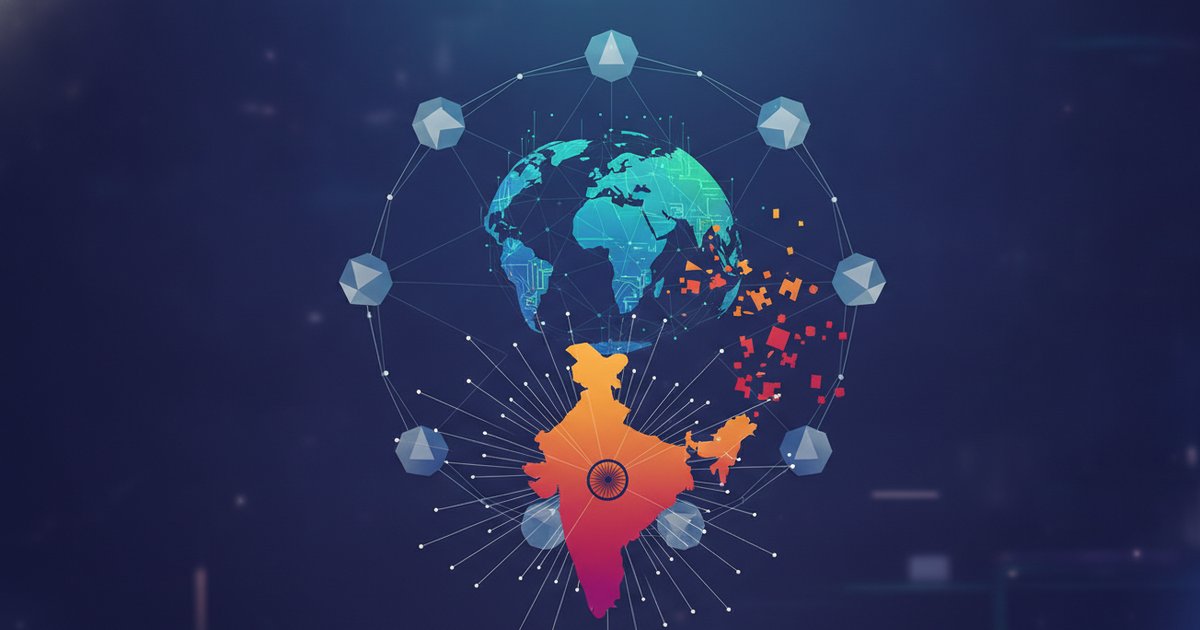
The push for a coalition is, at heart, an admission that the current system isn’t working. Right now, AI is governed by a patchwork: the EU’s AI Act with its risk tiers and conformity assessments, the UK’s evolving digital-markets and competition regime, and a US approach that leans heavily on export controls over advanced chips and, increasingly, the software and weights that run on them. These regimes were not designed to interlock. They overlap in some places, contradict in others, and leave gaps in between.
The deeper problem, as the TechStartups reporting frames it, is pace. Model capabilities are advancing faster than any of these frameworks can absorb. A regime calibrated to last year’s systems is structurally behind by the time it takes effect. When the rules lag the technology, two things happen: companies arbitrage the gaps, and countries outside the rule-making core become rule-takers — absorbing standards they had no hand in shaping.
Export controls are the sharpest illustration of how far this reaches. They began as restrictions on physical hardware — the most advanced GPUs. But the logic of control is migrating up the stack, toward the models themselves and the corporate supply chains that distribute them. That matters enormously, because a model is not a static export like a chip in a box. It can be updated, throttled, geofenced, or switched off remotely. Control over a model is ongoing, not a one-time transaction. A coalition that coordinates export controls is therefore coordinating something far more durable than trade policy — it is coordinating a kill switch.
India’s position
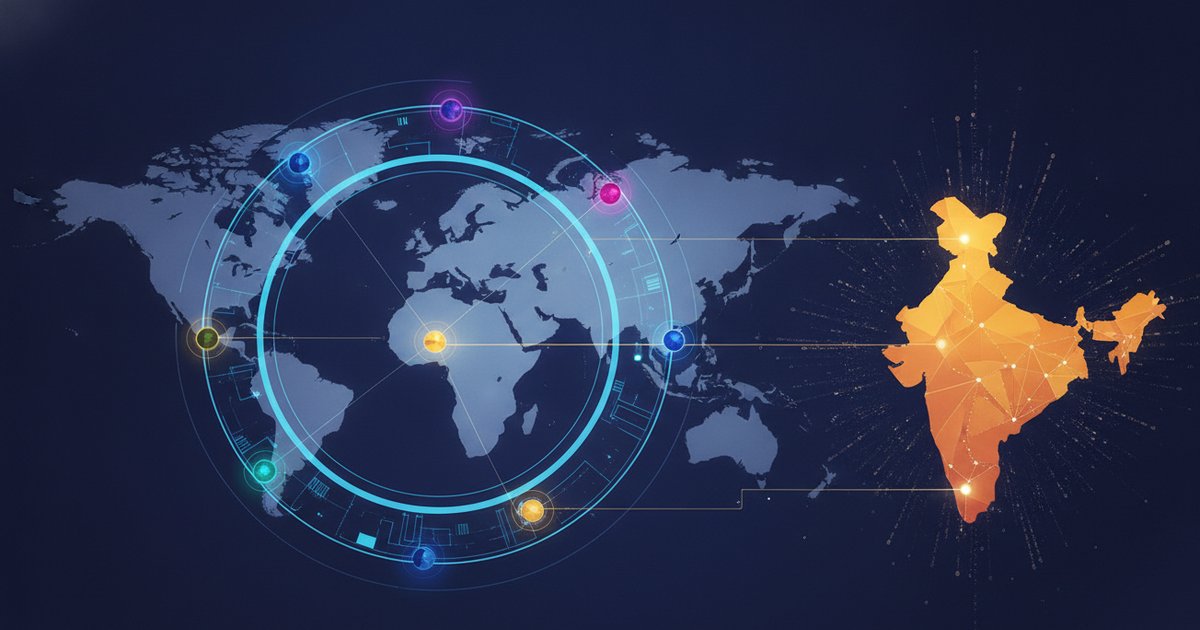
Here is India’s awkward, instructive reality: it is one of the world’s most important AI markets and one of its deepest talent pools, yet it sits outside the G7 and therefore outside the bloc taking shape inside it. India trains and exports an outsized share of the engineers building these systems globally. It is a vast deployment market where AI products will find hundreds of millions of users. And it has a national ambition, expressed through IndiaAI and related initiatives, to build sovereign capability rather than rent it wholesale.
The export-control story is the uncomfortable part. Much of India’s near-term AI stack — frontier models, the chips beneath them, the cloud infrastructure around them — currently runs on capabilities that sit inside, or adjacent to, the coalition being formed. If access to those capabilities can be coordinated, tiered, or in extreme cases withdrawn, then a country outside the bloc is in a structurally exposed position. The reminder that a model can be switched off is not paranoia; it is the design principle of software-based export control. Dependence without a seat at the table is a strategic liability.
But India is not without leverage, and this is where the analysis gets more optimistic. Its Digital Public Infrastructure — the Aadhaar–UPI–data-exchange stack — is a genuine, exportable model of how a large, diverse democracy builds population-scale digital systems with public rails rather than private monopolies. DPI has already become a soft-power instrument, adopted and studied across the Global South. India can credibly argue that it brings something to AI governance that the G7 bloc cannot: a tested philosophy of inclusive, interoperable, publicly-governed digital infrastructure. IndiaAI, if it delivers domestic compute and indigenous models, converts that philosophy into bargaining power. A market and talent base this large is not easily ignored — but only if India presents it as a coordinated negotiating asset rather than a passive customer.
Rule-shaper or rule-taker
The strategic choice in front of India is binary in framing even if messy in practice: accept standards written elsewhere, or work to shape them. Being a rule-taker is the default — it requires no effort, just patience and compliance. Being a rule-shaper requires India to build coalitions of its own.
Several paths are open, and they are not mutually exclusive:
- Engage the bloc from outside. India can press to participate in any international AI testing forum — the Altman proposal — even without G7 membership. Shared testing standards are the least adversarial entry point, and the one where India’s engineering depth is most obviously valuable.
- Lead a Global South coalition. The countries outside the G7 bloc vastly outnumber those inside it, and most face the same rule-taker problem. India, with DPI credibility and a non-aligned diplomatic tradition, is unusually well placed to convene them — not as a rival bloc, but as a voice insisting that governance frameworks be interoperable and accessible, not gated.
- Use multilateral forums it already leads. Through the G20, BRICS, and bodies like the Global Partnership on AI, India has platforms to inject its priorities into the conversation before a Western bloc’s standards harden into global defaults.
- Build enough sovereign capability to have options. Leverage in any negotiation comes from alternatives. Every increment of domestic compute, every credible Indian model, every locally-governed dataset reduces the country’s exposure to a remote switch.
For founders and operators, the watchlist is concrete. Track where the international testing forum lands and whether non-G7 participation is permitted — it will signal how open or closed this club intends to be. Watch how export controls evolve from hardware toward models and corporate supply chains, because that determines whether your AI stack is something you own or something you license at someone else’s discretion. Pay attention to IndiaAI’s compute and model commitments as a hedge. And read the EU AI Act’s extraterritorial reach carefully, because compliance with the strictest regime often becomes the global product baseline regardless of where you build.
The bloc forming at the G7 is not yet a finished structure. That is precisely why this moment matters. The architecture of AI governance is still wet cement. India can wait for it to set and then learn to live within whatever shape it takes — or it can press a hand into it now. The talent, the market, and the DPI playbook are real assets. The only question is whether India chooses to spend them as a rule-shaper, or saves them for a seat it was never offered.
