
Every few years a feature arrives that looks like a demo and turns out to be a utility. Live, in-call translation has been promised in glossy keynote videos for the better part of a decade, usually with stilted pauses and a presenter speaking unnaturally slowly. Google’s latest attempt is different in one respect that matters more than the marketing: it runs at the phone’s system level, during an ordinary voice call, across more than 70 languages. That moves it out of the category of party trick and into the category of plumbing — the kind you stop noticing because it just works. And if it works the way it’s described, no market on earth has more to gain from it than India.
What launched
Google rolled out Gemini 3.5 Live Translate, a speech-to-speech model that enables near real-time voice translation in more than 70 languages, according to a June 26, 2026 roundup from Build Fast with AI (a claim worth verifying against Google’s own announcement). The headline distinction is where the translation happens: at the system level. Rather than living inside a single app, Live Translate intercepts and translates a live voice call as it happens, so two people speaking different languages can hold something close to a normal conversation.
At launch, the feature rolls out first through the Google Translate app on Android and iOS and the Gemini Live API, with Google Meet getting an enterprise preview and on-device integration (starting with phones like the Pixel) promised in the coming months. That phased rollout is the catch, and we’ll return to it — but the architecture is the real story. Speech-to-speech means the system takes spoken input and produces spoken output, ideally preserving cadence and intent rather than routing everything through a clunky speech-to-text-to-speech relay. The ambition is a conversation, not a transcript read aloud.

Why the language count matters
Seventy-plus languages is not a vanity number. Per Build Fast with AI, that coverage exceeds comparable features from OpenAI or Anthropic at launch. Apple has announced a similar capability for iOS 27’s Siri, reportedly built on its AFM 3 Cloud Pro model, but has not published language-coverage details — so a like-for-like comparison isn’t yet possible. On breadth alone, Google appears to be out in front.
Breadth, though, is only one axis. The other two — and the ones that will decide whether this gets used or quietly disabled — are latency and quality. A translation layer that introduces a second-long lag turns conversation into walkie-talkie etiquette. One that mangles idiom, names, or numbers becomes a liability in any transaction where money or instructions are involved. System-level, on-device-leaning processing is Google’s bet on both fronts: keep the round trip short, and avoid the visible cloud routing that adds delay and raises privacy questions. Whether the model holds quality across all 70-odd languages — including the lower-resource ones that rarely get first-class treatment — is the open question. Coverage on a slide is easy. Coverage that handles a fast-talking caller switching registers mid-sentence is the actual bar.
The India opportunity
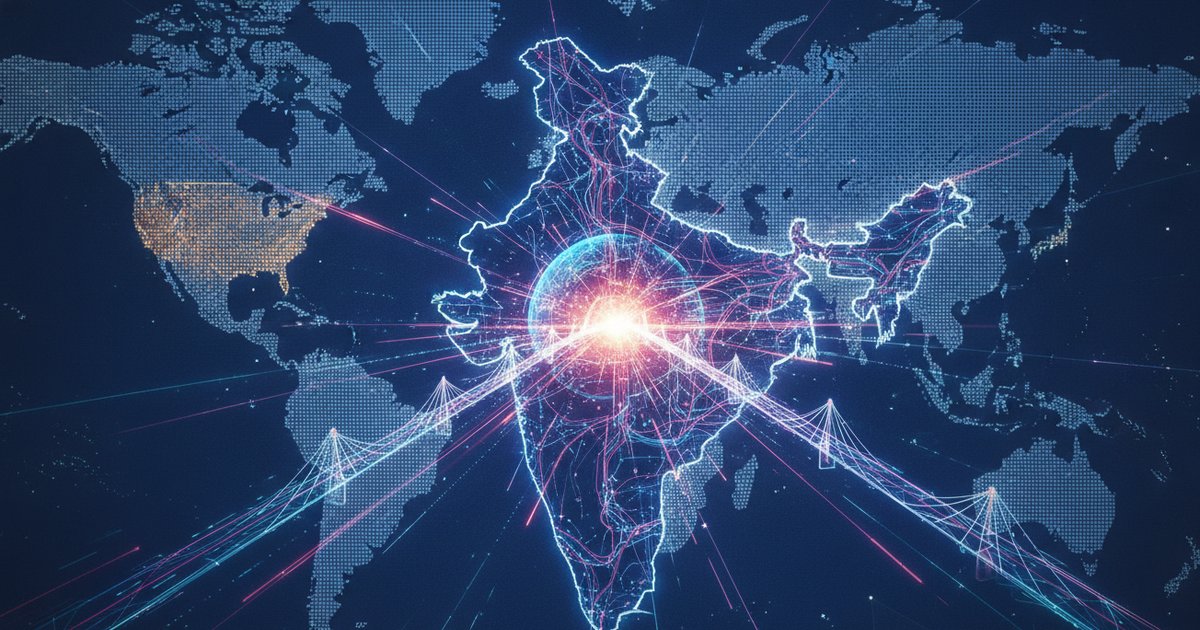
India is where a feature like this stops being convenient and becomes structural. The country runs on dozens of languages with no single lingua franca that reaches everyone. A Tamil-speaking customer, a Marathi-speaking field agent, a Bengali-speaking shopkeeper, and a Hindi-speaking call centre all coexist inside the same economy, frequently needing to transact with one another. Cross-language demand here isn’t a niche; it’s the default condition of doing business at scale.
Consider where real-time speech-to-speech translation lands:
- Customer support: A single agent could, in principle, serve callers across a dozen language regions without a language-specific hiring pipeline for each.
- Sales and field commerce: Distributors, insurance agents, and lending officers routinely cross language lines as they move between districts. A phone that translates live collapses a real friction point.
- Commerce and gig platforms: Delivery, logistics, and marketplace coordination often break down precisely at the language seam between buyer, seller, and rider.
- Government and public services: Citizen helplines, grievance redressal, and welfare delivery all run into the same wall — services designed in one or two languages reaching a population that speaks many.
The obstacle, for now, is hardware availability. Even with that app-first rollout, the most fluid real-time experience still leans on newer phones and reliable connectivity — exactly the opposite of where India’s linguistic diversity is most economically underserved. The people who would benefit most from live translation are largely on mid-range and budget Android phones. So the India opportunity is real but deferred: it scales only when Google delivers on its promise of broader chipset support and the capability trickles down to devices that sell in the tens of millions, not the hundreds of thousands. Until then, expect pilots and showcases rather than mass adoption.
Who should pay attention
If you operate in any business where language is a cost centre, this is a memo worth reading twice.
Customer-support and BPO operators. India’s outsourcing industry has spent two decades arbitraging labour costs and language skills. A credible system-level translation layer changes the calculus of who you hire and what you train for. The optimistic read: agents handle more languages, and capacity stops being gated by linguistic headcount. The cautious read: any capability that lets one worker do the job of several is, eventually, a question about headcount itself. Smart operators will treat this as a productivity tool to redeploy people toward judgement-heavy work — and start measuring whether the translation quality clears their compliance and accuracy thresholds now, not after a competitor does.
Creators and cross-language reach. The same underlying capability that translates a call points toward translating audio at large. For creators, the prize is reaching audiences across India’s language internet without producing separate versions for each. Whoever cracks natural-sounding, low-latency speech-to-speech for content — preserving voice and tone — unlocks a distribution multiplier that no amount of subtitling matches.
The human-translation and dubbing markets. These are the businesses most directly in the path. Live, machine speech-to-speech doesn’t erase the need for skilled human translators and voice artists — accuracy, nuance, legal precision, and creative performance still demand people. But it does compress the low-end, high-volume, “good enough” tier of the market, the routine translation and quick-turnaround dubbing that has been a reliable revenue floor. The defensible move for these firms is to climb: specialise in the high-stakes, high-craft work machines can’t yet do convincingly, and treat the model as a tool in the workflow rather than a competitor to deny.
A note of editorial caution: much of this rests on the feature performing as advertised across languages, accents, and call conditions — and on Google’s vague “later” for wider hardware support becoming a firm timeline. Live Translate could be the moment language stopped being a barrier to doing business across India, or it could be another impressive demo that real-world latency and patchy quality keep at arm’s length. The architecture is right, the language count is genuinely ahead of rivals at launch, and the demand in India is bottomless. What’s missing is the proof that it holds up when a real customer, on a real budget phone, in a real hurry, switches languages mid-sentence. That’s the test. India is the obvious place to run it.
