In a startup economy that spent years chasing quick-commerce speed and app-store virality, one of the quieter bets is turning out to be one of the more durable ones: getting a bottle of fresh milk to a household every single morning, and being trusted to do it. That is the business Doodhvale Farms is building, and on July 8, 2026 the Delhi-NCR-based direct-to-consumer dairy brand said it had raised another $1 million in a follow-on round from its existing lead investor, Atomic Capital Fund I.
It is a small cheque by headline standards. But in a category where trust and freshness are the entire product, and where the unglamorous work of owning the supply chain end-to-end is the actual moat, the raise is a useful window into why “boring” daily-essentials D2C can quietly compound into a real business.
The raise
According to Entrackr, the $1 million is a follow-on investment from Atomic Capital Fund I, the fund that already leads Doodhvale’s cap table. The company had previously raised a $3 million Series A in November 2024, co-led by Atomic Capital and the Singularity Early Opportunities Fund, taking total capital raised to roughly $4 million. The valuation was not disclosed.
Founded and led by Aman J Jain, Doodhvale Farms describes itself as a vertically integrated D2C dairy and daily-essentials brand. It runs fresh delivery across Delhi-NCR, Chandigarh, Ambala, Karnal and Meerut, and ships non-perishable, value-added products — ghee, wood-pressed oils, protein products, atta and other staples — to customers nationally.
The numbers the company shared alongside the raise explain the investor conviction. Per StartupTalky, Doodhvale’s D2C business nearly doubled over the past year, contributing to overall revenue growth of around 65%. Direct-to-consumer sales now account for roughly 90% of revenue, and value-added products — everything beyond plain milk — have grown to nearly 35%. The company also says new cities reach operational breakeven in under three months, a claim it credits to its integrated model, and it is targeting more than doubling the business over the next 12–18 months. Fresh capital is earmarked for market expansion, deeper distribution, product development and AI investment in demand forecasting and delivery-route optimisation.
Why vertical integration matters
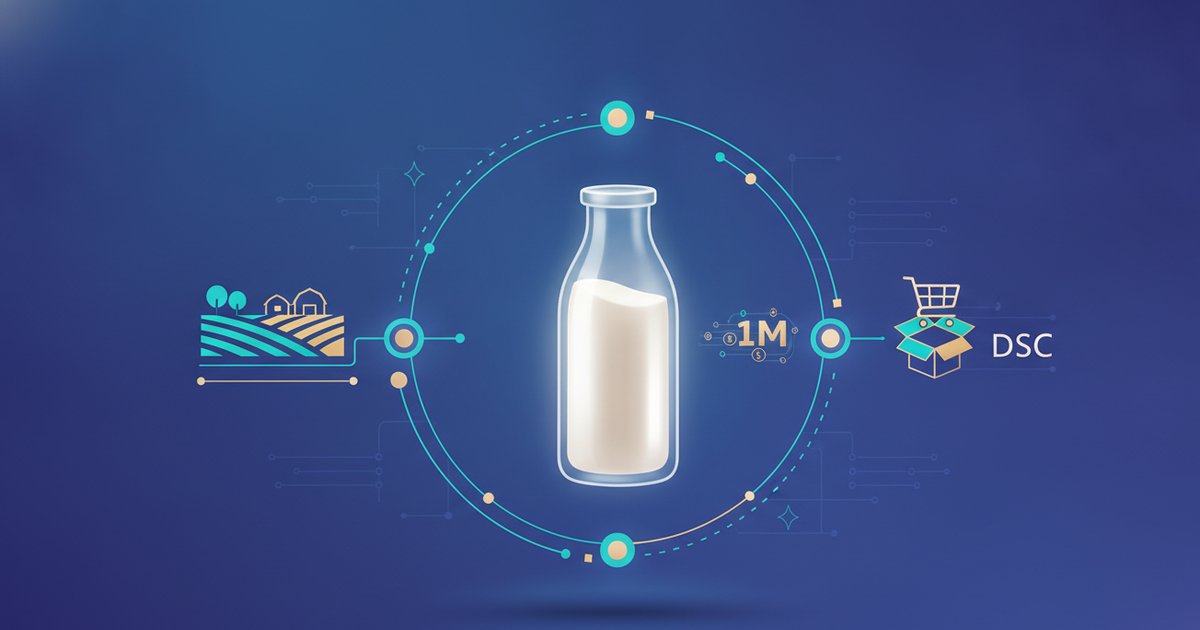
Milk is the ultimate trust purchase. It is consumed daily, often by children, and its quality is nearly impossible for a customer to verify at the point of sale. Adulteration is a genuine and long-running concern across the Indian dairy supply chain, which is exactly why “farm-to-home” and traceability language has become a category-defining pitch rather than a marketing flourish.
That is where owning the chain end-to-end pays off. When a brand controls the path from farm to doorstep, it can stand behind quality claims in a way an aggregator reselling third-party supply cannot. In the language the founder used, per the funding coverage, the brand exists to “end that compromise” — the everyday trade-off households make between convenience and confidence in what they are consuming. Vertical integration is what makes “trust in a bottle” more than a slogan: it is the operational precondition for it.
The commercial logic is just as important as the trust logic. Dairy and daily essentials are habitual, recurring purchases. A household that subscribes to a morning milk delivery is not making a fresh buying decision every day; it is defaulting into one. That converts a low-margin commodity into a high-frequency, high-retention relationship — and every additional SKU the brand can attach to that daily habit (ghee, oils, atta, protein) rides on distribution the company has already paid for.
The challenges
None of this is easy, and the same model that creates the moat also creates the hard problems.
- Thin margins and cold-chain logistics. Fresh dairy is perishable, price-sensitive and expensive to move at temperature. Daily last-mile delivery of a low-ticket item is punishing on unit economics; the whole business lives or dies on route density and wastage control — which is precisely why Doodhvale is putting money into AI-driven demand forecasting and route optimisation.
- Scaling beyond a core region. Fresh delivery is inherently local. The current footprint clusters around Delhi-NCR and neighbouring north-Indian cities for a reason: each new city needs its own supply, cold chain and delivery density before it works. The company’s claim of sub-three-month breakeven in new cities is the number to watch here, because geographic expansion is where integrated fresh-delivery models most often stall.
- Competition from both ends. Doodhvale sits between entrenched incumbents — cooperatives and large packaged-dairy brands with enormous scale advantages — and a crowded field of local milk vendors and quick-commerce platforms now pushing into daily essentials. Standing out means the trust-and-freshness proposition has to be real and legible to the customer, not just asserted.
The India read
Zoom out and the interesting thing is not the size of this cheque but what it signals about a category. Much of India’s D2C excitement has flowed to discretionary, high-margin, high-story products — beauty, apparel, wellness. Daily essentials are the opposite: low margin, no glamour, unforgiving logistics. But they come with something those categories envy — genuinely durable, non-discretionary demand. People buy milk in booms and downturns alike.
In our view, that is the quiet strategic argument here. If the trust proposition is credible enough to win the morning delivery slot, farm-to-home becomes a real moat: hard to replicate without owning the supply chain, and sticky because it is wired into a daily habit rather than a periodic purchase decision. The metric that matters is retention — whether households that start keep coming back — and the financials Doodhvale disclosed, with 90% of revenue from D2C and value-added products approaching a third of the mix, suggest that habit is beginning to compound.
The follow-on itself is a signal too. An existing lead investor writing another cheque, as Atomic Capital has here, is usually a vote of confidence in unit economics rather than a bet on a moonshot. That is the whole pitch of daily-essentials D2C: not a category that explodes, but one that, done with discipline, becomes part of how a household eats every day — and keeps paying for it.
