
India’s delivery backbone is being rebuilt in real time. Quick commerce has compressed delivery windows to minutes, e-commerce keeps pushing parcel volumes higher, and the vehicles carrying all of it are increasingly electric. Into that shift steps TOCAL, a Bengaluru-based startup betting that the winning play is not just cheaper delivery riders, but an integrated stack that couples electric fleets with fulfilment infrastructure and the software to run both. Its first outside cheque is small, but the ambition attached to it is not.
The raise
TOCAL, launched in 2021 by Dhairyasheel Deshmukh and Hidayathulla Shareef, has raised Rs 9 crore (roughly $1 million) in a seed round led by XB Group, the parent of K-Indev Logistics, with Navyug Global Ventures and an angel investor participating, according to a StartupTalky daily funding roundup (July 6, 2026).
The strategic logic of the lead investor is worth noting. XB Group’s logistics lineage means this is not purely financial capital; it is money attached to a network that understands freight, fulfilment and the operational grind of moving goods across India. For an early-stage fleet-and-fulfilment company, that kind of backer can matter as much as the amount.
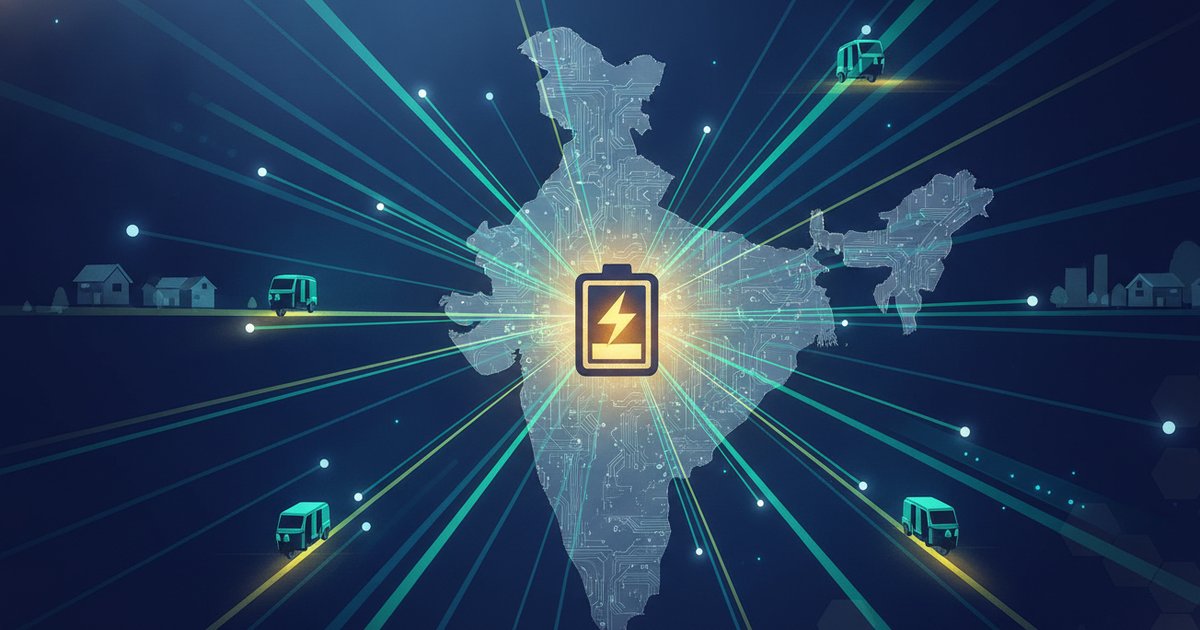
What TOCAL is building, per the same report, is a three-part platform: EV-powered last-mile delivery, fulfilment centres, and fleet-management software that ties the operation together. The company says it aims to expand to more than 15 cities, deploy over 20,000 electric vehicles, and operate 75 fulfilment centres over the next four to five years. That is a large target set against a modest seed round, which tells you two things at once — this is a capital-intensive space, and Rs 9 crore is a starting gun, not a finish line.
Why electrify the last mile
The case for going electric on the last mile rests on two pillars that rarely align so neatly: cost and climate.
On cost, the last mile is the most expensive and least efficient leg of any delivery chain — lots of stops, short distances, heavy labour dependence. Electric two- and three-wheelers change the running-cost maths. Per-kilometre energy costs are meaningfully lower than petrol equivalents, and fewer moving parts translate into lower maintenance over a vehicle’s life. For platforms and their delivery partners operating on thin margins, that total-cost advantage compounds across thousands of daily trips.
On climate, electrifying urban delivery removes tailpipe emissions from exactly the congested city cores where air quality is worst and delivery density is highest. As quick commerce normalises 10-minute groceries and e-commerce volumes keep climbing, the sheer number of last-mile trips is rising fast. Electrifying that growth curve is the difference between logistics as a pollution multiplier and logistics as a decarbonisation lever.
TOCAL’s wedge is the integration itself. Plenty of companies rent out electric scooters to gig riders; plenty of others run fulfilment centres or dark stores. Combining fleet, fulfilment and software under one roof is a harder build, but it promises tighter control over the variables that make or break unit economics — vehicle utilisation, charging schedules, inventory placement and route efficiency. If it works, the whole is cheaper to run than the sum of outsourced parts. That is the thesis. Execution is another matter.

The competitive picture
TOCAL is entering a field that is already crowded and reasonably well-capitalised. StartupTalky’s report names Zypp Electric, Shadowfax, LoadShare and Fyn Mobility as competitors — a set that spans EV-first delivery fleets, broad logistics networks and mobility platforms. Each has a head start in scale, brand recognition among enterprise clients, or both.
Competing here means solving a handful of unglamorous problems better than incumbents:
- Charging and uptime. An idle EV earns nothing. Battery swapping or fast-charging access, depot planning and route design all feed into how many productive hours a vehicle logs per day — the single biggest lever on fleet economics.
- Unit economics. The last mile is punishing on margins. Winning requires driving down cost per delivery through density, utilisation and low downtime, not just cheaper vehicles.
- Capital intensity. Vehicles, batteries and 75 fulfilment centres are balance-sheet-heavy commitments. Scaling to 20,000+ EVs will demand rounds far larger than this seed, and likely a mix of equity and asset financing. Rivals that have already raised at scale start with an advantage on cost of capital.
None of this is unique to TOCAL — it is the shape of the entire category. The bet the investors are making is that a founder team with a logistics-native backer can build the integrated stack efficiently enough to carve out defensible density in specific cities before spreading thin across fifteen.
The India read
Zoom out, and TOCAL is a small data point in a large and important story: the electrification of India’s delivery backbone. The country’s logistics sector has long been fragmented, informal and diesel-dependent. The quick-commerce boom has forced a rethink, pulling fulfilment closer to consumers through micro-warehouses and dark stores, and pushing delivery volumes to a scale that makes fleet economics — and fleet emissions — matter.
What makes the EV last-mile play strategically interesting is that cost and climate point the same direction. In many sectors, decarbonisation is a cost the business absorbs for the greater good. Here, electrifying delivery is plausibly the cheaper option at scale, which means market forces and policy incentives can reinforce each other rather than pull apart. That alignment is rare and valuable.
The harder question is who builds the infrastructure layer for the quick-commerce era. Delivery platforms want reliable capacity without owning depreciating assets; brands and retailers want fulfilment that reaches customers fast and clean. Someone has to own the vehicles, the charging, the warehouses and the software connecting them. TOCAL is arguing that this integrated infrastructure should be a business in its own right — a picks-and-shovels layer beneath the apps consumers actually see.
Whether TOCAL specifically hits 20,000 vehicles and 75 centres is almost beside the point. The direction of travel is clear: India’s last mile is going electric, the only questions are how fast, who funds the transition, and which handful of platforms end up owning the infrastructure. A Rs 9 crore seed round buys TOCAL a seat at that table. Staying there will take a great deal more — capital, operational discipline, and the ability to prove its integrated model actually beats the sum of its outsourced rivals. For now, it is a credible early bet in a space that India cannot afford to get wrong.
