
The story of Indian software has long been about services: building for the world, but rarely productising for it at scale. Kapture CX wants to be an exception. The Bengaluru company just raised fresh capital to push a verticalised agentic-AI platform into enterprise customer-experience workflows — and it is doing so on a deliberately un-hyped premise: that AI agents are more useful to large companies when a human is still holding the reins.
It is a concrete example of an Indian firm building enterprise agentic AI aimed squarely at global buyers, not just domestic ones. Here’s the raise, the model, and the bet underneath it.
The raise
Kapture CX has raised $10 million in a pre-Series B round led by Bajaj Finserv Ventures, with Cactus Venture Partners and India Alternatives participating, according to StartupTalky. The capital is earmarked for scaling what the company describes as a full-stack, verticalised agentic-AI platform for enterprise workflows.
Co-founded in 2014 by Sheshgiri Kamath and Vikas Garg, Kapture CX has spent more than a decade in the customer-experience software space, a category that has been repeatedly reshaped — first by cloud, then by omnichannel, and now by generative and agentic AI. The presence of Bajaj Finserv Ventures as lead investor is notable: strategic capital from a large financial-services group signals both a customer relationship and a vote of confidence in the platform’s suitability for regulated, high-volume environments.
The round size is modest by the standards of headline-grabbing AI raises, but the framing matters. This is a pre-Series B — growth capital to convert an existing base into durable, expanding revenue — rather than a speculative bet on an unproven idea. In a funding climate where AI valuations have run hot and investor patience for burn has cooled, a raise pointed at scaling proven traction reads as a more grounded proposition.
The ‘agents + oversight’ model
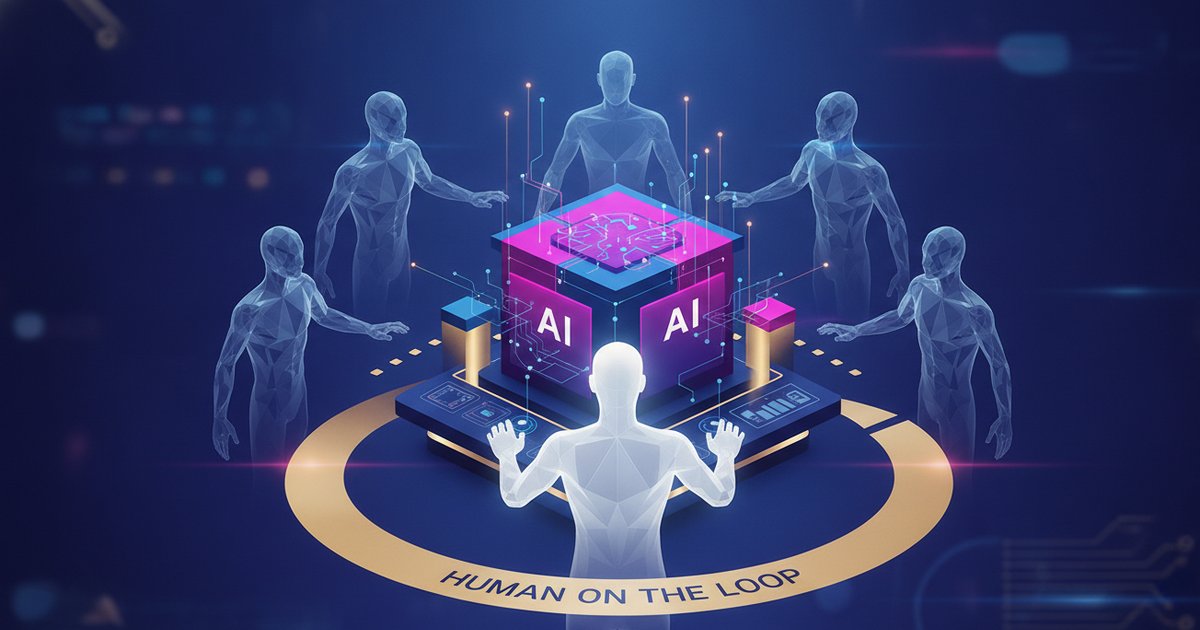
The heart of Kapture CX’s pitch is a combination that is easy to state and hard to build: AI agents, operational intelligence, and human oversight, stitched together for specific enterprise workflows. In practice, that means autonomous agents handle the bulk of routine customer interactions and back-office tasks, an operational-intelligence layer routes and monitors that work, and human operators step in where judgment, escalation, or compliance demand it.
The word doing the heavy lifting here is verticalised. A generic agent that can answer any question is impressive in a demo and unreliable in production. An agent trained and constrained for, say, a lending firm’s collections workflow or a retailer’s returns process is narrower — and precisely because it is narrower, it is more predictable. Kapture CX is betting that enterprises don’t want a clever generalist; they want a dependable specialist that knows the rules of their particular business.
That is where the human-in-the-loop design becomes a feature rather than a limitation. Fully autonomous agents make for great marketing, but enterprises deploying AI against customers, money, and regulators care less about autonomy and more about control. The selling points Kapture CX leans on — reliability and oversight — are exactly the attributes that break down in unsupervised large-language-model deployments: hallucination, off-policy responses, and actions that can’t be audited. By keeping humans on the loop, the platform trades a little theoretical efficiency for a lot of practical trust.
- AI agents to execute high-volume, repetitive workflows.
- Operational intelligence to monitor, route, and improve those workflows.
- Human oversight to handle exceptions, edge cases, and accountability.
The architecture is a wager on where the market actually is, versus where the hype says it should be. The industry narrative has raced ahead to “agents that replace teams.” The enterprise reality is agents that augment teams while a supervisor watches the dashboard.

The traction and the test
Kapture CX claims over 1,000 enterprise clients across 18 countries, including Bajaj Finance and companies within the Tata and Reliance groups, per StartupTalky. If accurate, that is a meaningful installed base — the kind of footprint that gives a platform real data density across industries and geographies, and gives new agentic features somewhere to land immediately rather than needing to be sold from scratch.
But client counts and country counts are the beginning of the test, not the end of it. The defining challenge for every agentic-AI vendor right now is the same: moving from pilots to production. It is comparatively easy to get an enterprise to run a limited proof-of-concept; it is far harder to earn a place in the critical path of customer interactions that happen millions of times a day, where a bad answer costs money or trust. The question for Kapture CX is how many of those 1,000-plus relationships are running agents in dependable, at-scale production — and how many are still testing the waters.
The competition is formidable. Global platforms — from the CX incumbents bolting AI onto established suites to the well-funded agent-native startups — are chasing the same enterprise budgets. Kapture CX’s counter is depth of vertical workflow and a decade of domain relationships, particularly in Asian and Indian enterprise markets that global players often serve less intimately. Whether that is a durable moat or a temporary head start is the open question. Vertical depth is defensible right up until a larger platform decides your vertical is worth acquiring or out-building.
The India read
Zoom out, and Kapture CX is a data point in a larger and more interesting story: India building enterprise agentic AI for global buyers, not merely consuming AI built elsewhere. For years the Indian tech economy exported engineering talent and IT services. A company shipping a productised agentic platform to enterprises across 18 countries — with strategic backing from a domestic financial-services giant — is a different posture. It is product, not just services; IP, not just implementation.
The human-in-the-loop design is worth reading as a deliberate strategic choice, not a stopgap. As regulators in the EU, India, and elsewhere sharpen their expectations around AI accountability, the ability to show a human owner for consequential decisions becomes a competitive asset. Trust — auditable, controllable, explainable trust — may end up being the differentiator that separates enterprise-grade platforms from consumer-grade cleverness. If that thesis holds, Indian vendors positioning themselves as the reliable, oversight-first option are aiming at a real and growing gap in the market.
The opportunity underneath all of this is enterprise customer-experience automation, one of the clearest near-term commercial applications for agentic AI. CX is high-volume, rules-heavy, and expensive to staff — a near-perfect fit for agents that automate the routine while escalating the sensitive. Every large bank, retailer, and telco is under pressure to cut cost-to-serve without torching customer satisfaction, and agentic platforms promise exactly that trade if they can be trusted in production.
Kapture CX’s $10 million doesn’t settle any of these questions; it buys the company runway to try. The interesting thing to watch is not the raise but the ratio: how quickly pilots convert to production, how much of that 1,000-client base becomes deeply embedded, and whether “agents plus oversight” turns out to be the sober middle path enterprises actually want. If it is, an Indian company will have helped define the template — and that, more than any single funding round, is the story worth following.
